

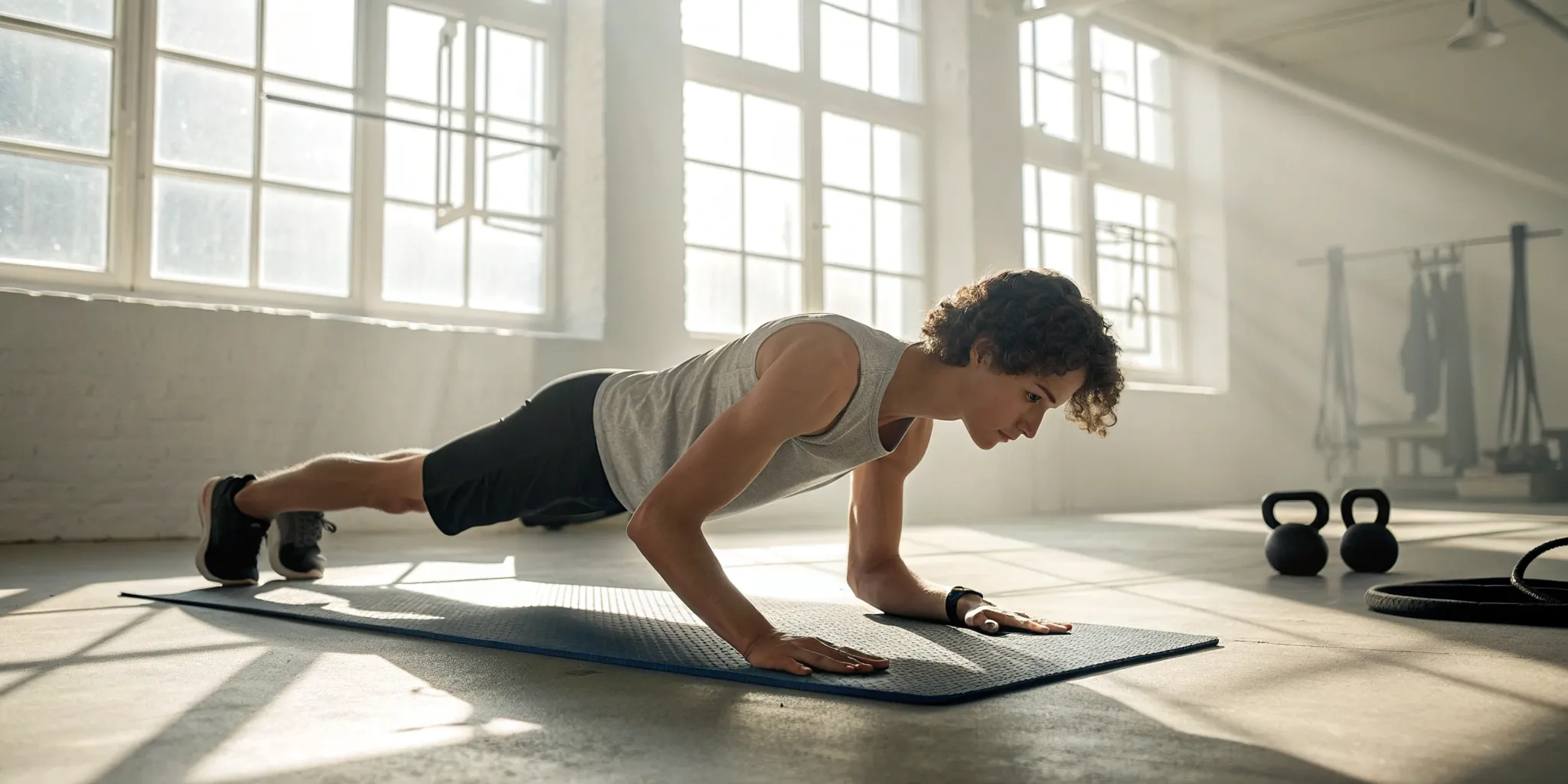
Strength isn’t just about how much you can lift; it’s about moving through your daily life with confidence and ease. It’s about carrying all the groceries in one trip or lifting your kid without a second thought. Bodyweight training builds this practical, real-world strength. These exercises teach your body to work as a single, coordinated unit by mimicking the natural movements you use every day. By focusing on a bodyweight workout beginner routine, you’re not just getting fitter for a 30-minute session; you’re building a more capable and resilient body that’s ready for anything, both in and out of the gym.
Key Takeaways
- Master the Basics to Build a Strong Foundation: Bodyweight exercises are the perfect starting point because they teach you proper form without any equipment. Focus on quality movements like squats, push-ups, and planks to build the strength and body awareness needed for any fitness goal.
- Create a Smart Routine for Lasting Results: A simple structure of a warm-up, the main workout, and a cool-down protects you from injury and makes your efforts more effective. Plan for two to four workouts a week, making sure to include rest days so your body can recover and get stronger.
- Challenge Yourself Consistently to Keep Progressing: Once an exercise feels manageable, it's time to make it slightly harder to keep building strength. You can do this by adding more reps, slowing down the movement, or trying a more difficult variation to ensure you never hit a plateau.
What is a Bodyweight Workout?
So, what exactly is a bodyweight workout? It’s a strength training routine that uses your own body as the equipment. Instead of picking up dumbbells, you use your body’s weight to create resistance through exercises like push-ups, squats, and planks. It’s one of the most accessible ways to get strong, improve coordination, and build a solid fitness foundation. Bodyweight exercises can be scaled to challenge you right where you are, making them a perfect starting point. Let's break down what makes this approach so effective.
Your Body is the Gym
The best part about bodyweight training is that you already have everything you need. Your body is the gym. Every push, pull, and squat uses your own weight to build strength, stability, and coordination without a single piece of equipment. This makes it an effective way to learn proper form and connect with how your body moves. Because you can easily adjust an exercise’s difficulty—for example, doing push-ups on your knees instead of your toes—it’s the perfect starting point for beginners. You can build a strong foundation and progress at your own pace.
No Equipment, No Excuses
One of the biggest hurdles to fitness is just getting to the gym. With bodyweight workouts, that excuse is gone. You can do them anywhere—your living room, a park, or a hotel room. This flexibility makes it easier to stay consistent. And don't think you can't build muscle without weights. The key is continuously challenging your muscles by adding reps, slowing down the movement, or trying harder variations. Your body doesn't know the difference between a dumbbell and your own weight; it only knows resistance, and that’s what creates change.
Move the Way You're Meant To
Bodyweight training is all about functional movement. These exercises mimic natural, everyday actions your body was designed for, like squatting, pushing, and lunging. By training these patterns, you’re not just getting stronger for a workout; you’re improving your ability to handle daily life with ease. This approach enhances your balance, flexibility, and coordination. More importantly, strengthening these functional movements helps reduce your risk of injury, whether you're carrying groceries or joining a high-intensity class down the road.
Why Start with Bodyweight Workouts?
If you're looking for a straightforward way to begin your fitness journey, bodyweight training is your answer. It’s an effective method for building a solid foundation of strength, stability, and endurance without needing any special equipment. Think of it as the essential first step that prepares your body for more challenging workouts down the road, like the high-intensity classes we love at Armourbody. By using your own body as resistance, you can focus on mastering fundamental movements, which is the key to getting stronger and preventing injuries.
Before you can lift heavy or push through intense cardio intervals, you need to teach your body how to move correctly. Bodyweight exercises do exactly that. They build the mind-muscle connection and improve your proprioception—your sense of where your body is in space. This isn't just about doing push-ups and squats in your living room; it's about creating a resilient, capable body that's ready for anything. It’s a simple, accessible, and powerful way to start getting results, build the confidence you need to take your fitness to the next level, and prove to yourself that you have everything you need to get started right now.
Work Out Anywhere, Anytime
One of the biggest hurdles to starting a fitness routine is simply finding the time and space. Bodyweight exercises remove that barrier completely. Because you don't need any equipment, you can do them in your living room, a hotel room, or a local park. This flexibility means you can fit in a workout whenever your schedule allows, whether it’s a quick 15-minute session before work or a longer routine on the weekend. You have the freedom to build strength, stability, and coordination on your own terms, making it easier than ever to stay consistent and build momentum.
Save Money, Get Fit
Getting in shape doesn't have to be expensive. Bodyweight workouts are completely free, which means you can start building strength and muscle without paying for a gym membership or buying a single piece of equipment. Your body provides all the resistance you need to get a challenging and effective workout. This approach allows you to invest your energy into what really matters: learning the movements and building a consistent habit. It proves that you don't need a fancy setup to achieve your fitness goals; you just need commitment and a little bit of floor space to get started.
Build Strength and Flexibility Together
Bodyweight exercises are all about functional fitness. They mimic natural, everyday movements like squatting to pick something up, pushing a door open, or lunging to tie your shoe. By practicing these patterns, you’re not just building isolated muscles; you’re training your body to move more efficiently and powerfully as a single, coordinated unit. This approach improves your strength, balance, and flexibility all at once. You’ll build a practical kind of strength that supports you in your daily life and prepares you for more advanced training when you’re ready.
A Safer Way to Start
When you’re new to exercise, jumping straight into heavy lifting can be intimidating and even risky. Bodyweight training offers a safer starting point. Without the added load of weights, you can concentrate entirely on your exercise form and technique. This focus helps you build crucial body awareness and master the correct movement patterns from day one. By creating this strong foundation, you significantly lower your risk of injury, ensuring that as you get stronger and decide to take on new challenges, your body is ready for them.
Master These Essential Bodyweight Exercises
Ready to build your foundation? Mastering a few key movements is all it takes to create an effective, full-body workout. Focus on your form, and you’ll build the strength and confidence to take on any fitness challenge. These exercises are the building blocks for a stronger you, creating a solid base for your fitness journey.
Build Upper-Body Strength
Don’t worry if you can’t do a full push-up yet—most beginners can’t. A modified push-up is one of the best beginner bodyweight exercises because it works your chest, shoulders, and triceps without overwhelming you. To get started, get into a plank position, then drop your knees to the floor. Keeping your back straight, bend your elbows to lower your chest toward the ground. Press back up to the starting position. This simple modification allows you to build strength gradually and safely, ensuring you maintain great form from day one.
Power Your Lower Body
The bodyweight squat is a powerhouse move that targets your glutes, thighs, hamstrings, and core all at once. Stand with your feet about hip-width apart. Push your hips back and bend your knees like you’re about to sit in a chair, keeping your chest up and your back straight. For an added challenge, incorporate lunges to work on your balance and target one leg at a time, a key part of many effective bodyweight workouts. Aim for three sets of 8-10 reps per leg to really feel the burn and build lower-body power.
Strengthen Your Core
A strong core is the key to stability and power in almost every movement you make. The plank is a classic for a reason: it works. Start by holding a straight-arm or forearm plank for 20–30 seconds, focusing on keeping your body in a straight line from your head to your heels. Another fantastic move is the Bird Dog, which strengthens your deep core muscles and back. From all fours, extend one arm straight forward while extending the opposite leg straight back. This is a core part of a perfect bodyweight workout for a reason.
Work Your Whole Body at Once
Once you feel comfortable with the basics, you can try a full-body exercise like the burpee. This move combines a squat, a plank, and a push-up into one challenging sequence. Because it’s so demanding, it’s a good idea to master the individual components before you put them all together. Full-body movements are fantastic because they give you both strength and cardio benefits in one efficient package. There are many bodyweight workouts for beginners that can help you progress toward more complex exercises as you get stronger.
How to Structure Your First Workout
Walking into a workout without a plan is like trying to build furniture without instructions—you might get something done, but it probably won't be very effective or safe. A well-structured workout ensures you warm up properly, work your muscles efficiently, and cool down to prevent injury and aid recovery. Think of it as a simple recipe for success that you can follow every single time. The basic formula is a warm-up, the main workout (made of exercises, sets, and reps), and a cool-down. This structure helps you get the most out of every session, whether you have 20 minutes or a full hour. It also builds a great foundation of habits that will serve you well as you get stronger and maybe even decide to join a group class like ours at Armourbody. By understanding these core components, you can create a routine that’s not just effective but also sustainable. It takes the guesswork out of your fitness, allowing you to focus on your form and effort. Let's break down exactly what each part looks like so you can build your first workout with confidence and start seeing real results.
The Perfect Warm-Up
Jumping straight into a workout without warming up is a recipe for injury. Think of your muscles like rubber bands—if you try to stretch a cold one too far, it might snap. A proper warm-up gradually increases your heart rate and blood flow, getting your muscles ready for action. It doesn't have to be complicated. Spend about five to ten minutes doing some light cardio and dynamic stretches. This could be as simple as jogging in place, doing some jumping jacks, or swinging your arms and legs. The goal is to feel slightly warmer and more limber, signaling to your body that it's time to work.
Understand Sets, Reps, and Rest
When you see a workout plan, you'll often come across the terms "sets" and "reps." A "rep" (repetition) is one complete motion of an exercise, like a single push-up. A "set" is a group of reps. For example, doing 10 push-ups is one set of 10 reps. As a beginner, a great way to structure your workout is with a circuit. This means you'll do each exercise one after another with minimal rest in between. Once you've completed all the exercises in your list, that's one circuit. Then, you can rest for a minute or two before repeating the whole circuit 2-3 more times. Don't be afraid to take a break if you feel too tired—listening to your body is key.
How Long Should You Work Out?
One of the biggest questions for beginners is how long a workout should be. The good news is you don't need to spend hours exercising to see results. A solid beginner bodyweight workout can be done in just 20-30 minutes. The focus should be on quality over quantity. Aim for a complete workout that targets all the major muscle groups in your body—upper body, lower body, and core. For frequency, try to do this routine 2-4 times a week. It's crucial to give your body time to recover, so make sure you take at least 48 hours off between sessions that work the same muscles. This rest period is when your muscles actually repair and grow stronger.
Cool Down and Recover Right
Just as important as the warm-up is the cool-down. After your last rep, don't just collapse on the couch. A cool-down helps your heart rate return to normal gradually and can reduce muscle soreness later. Spend about five minutes on some light activity and stretching. This could include a slow walk, followed by some static stretches where you hold each stretch for 20-30 seconds. Focus on the muscles you just worked. Pairing this with some deep breathing can help your body shift from a state of work to a state of recovery. This simple habit makes a huge difference in how you feel the next day and prepares you for your next workout.
How Often Should You Work Out?
When you're starting a new fitness routine, it's easy to go all-in, but consistency is what truly builds strength and creates lasting habits. So, how often should you be doing these bodyweight workouts? A great goal for beginners is to aim for two to four workouts per week. This frequency gives your body enough time to adapt and recover, which is when your muscles actually get stronger.
The most important rule is to listen to your body. Some weeks you might feel energized and ready for four sessions, while other weeks, two might be all you can manage. That’s perfectly fine. The key is to avoid working the same muscle groups on back-to-back days. Giving yourself at least 48 hours between sessions that target the same areas helps prevent injury and ensures you’re getting the most out of every workout. Think of it as a rhythm: work, rest, repeat. This approach builds a solid foundation, so you can keep showing up week after week.
Your Sample Weekly Schedule
Figuring out how to plan your week can feel overwhelming, but a simple schedule can make all the difference. The goal is to mix work days with rest and active recovery. An effective bodyweight training plan includes different types of movement to keep things balanced. Here’s a sample schedule to get you started:
- Monday: Full-Body Workout
- Tuesday: Active Recovery (e.g., a brisk walk, stretching)
- Wednesday: Full-Body Workout
- Thursday: Active Recovery
- Friday: Full-Body Workout
- Saturday: Rest or Active Recovery
- Sunday: Rest
This structure gives you a day of rest between workouts, helping your muscles heal and grow. As you get more comfortable, you can see how a structured week of workouts can help you reach your goals even faster.
Why Rest Days Matter
It might sound counterintuitive, but rest days are just as important as your workout days. When you exercise, you create tiny micro-tears in your muscle fibers. It’s during the rest period that your body gets to work repairing these tears, building your muscles back stronger than before. Skipping rest days means you’re constantly breaking your muscles down without giving them a chance to rebuild. This can lead to burnout and injury, stopping your progress in its tracks.
Think of rest as a crucial part of your training. It’s not about being lazy; it’s about being smart. On your rest days, you can still move your body with some light activity like walking or gentle stretching, which is known as active recovery.
How to Keep Getting Stronger
Once you get the hang of your routine, you might notice the exercises starting to feel a bit easier. That’s a great sign! It means your body is adapting and getting stronger. To keep making progress, you need to continue challenging your muscles. This is often called progressive overload, and it’s the key to building strength over time.
You don’t need to find a whole new set of exercises. Instead, you can make small changes to your current routine. Try adding a few more reps to each set, or hold positions like planks and squats for a little longer. Another great option is to switch to a more difficult version of an exercise—like moving from knee push-ups to full push-ups. These small adjustments will keep your body guessing and ensure you never hit a plateau.
Overcome Common Beginner Hurdles
Starting something new always comes with a few bumps in the road, and fitness is no exception. It’s completely normal to feel a little lost, sore, or unmotivated at first. But don’t let these early challenges derail your progress. By anticipating them and having a plan, you can move past them and build a routine that sticks. Here’s how to handle the most common hurdles you’ll face as a beginner.
Nail Your Form and Technique
When you’re just starting, it’s tempting to focus on how many reps you can do or how fast you can go. But here’s a secret: form is everything. Focusing on proper form builds a solid foundation of body awareness that lowers your risk of injury as you get stronger. Good technique ensures you’re actually working the intended muscles, which means you’ll see results faster. Before you start, watch a few videos of each exercise. When you’re working out, use a mirror to check your alignment or even record yourself on your phone. It might feel a bit strange at first, but it’s one of the best ways to catch mistakes and build great habits from day one.
Deal with Muscle Soreness
Feeling sore a day or two after a workout is a sign that your muscles are adapting and getting stronger. This is called Delayed Onset Muscle Soreness (DOMS), and it’s totally normal. However, it’s crucial to learn the difference between muscle fatigue and sharp pain. If you feel a sudden, sharp pain during an exercise, stop immediately. Your body knows best, so listen to it. It’s perfectly fine to take an extra rest day if you're very sore. Gentle movement like walking or stretching can actually help ease the stiffness. Don’t push through pain—give your body the time it needs to recover and come back stronger for your next session.
Stay Motivated and Consistent
Motivation is great, but it won’t always be there. That’s where consistency comes in. The key is to build a habit that you can stick to even on days you’re not feeling it. Instead of aiming for a huge goal right away, set smaller, achievable ones, like completing three workouts this week. Tracking your progress is another great way to stay on track; seeing how many more push-ups you can do now versus last month is incredibly rewarding. And if you find your motivation dipping, consider working out with others. The energy of a group can make all the difference, which is why so many people thrive in a community environment like the classes at Armourbody.
Modify Exercises for Your Fitness Level
Every single exercise can be adjusted to fit your current fitness level, so never feel like you have to do the most advanced version. The goal is to challenge yourself, not to perform perfectly on day one. If an exercise feels too difficult, you can simply do fewer reps or sets. You can also try an easier variation, like doing push-ups on your knees or performing squats with a chair for support. As you get stronger and an exercise starts to feel too easy, you can make it harder by adding more reps, slowing down the movement for more control, or trying a more challenging version. This flexibility allows you to continuously progress at your own pace.
Track Your Progress and Stay Motivated
Starting a new workout routine is exciting, but the real magic happens when you stick with it. Motivation can come and go, which is why having a system for tracking your progress is so important. Seeing how far you’ve come is one of the best ways to keep showing up for yourself, even on days when you don’t feel like it. It’s not about being perfect; it’s about being persistent. Let’s get into a few simple strategies to help you stay on track and celebrate your hard work along the way.
Set Goals You Can Actually Reach
It’s easy to get caught up in huge, long-term ambitions, but those can feel intimidating when you’re just starting. Instead of focusing on a massive goal, it’s more effective to set smaller, weekly targets you can realistically hit. For example, aim to complete three bodyweight workouts this week or hold a plank for 10 seconds longer than you did last week. These small, measurable achievements build momentum and confidence. By breaking down your larger goals into bite-sized pieces, you create a clear path forward and give yourself consistent wins to celebrate, which keeps you fired up for the next challenge.
Use a Journal or App to Track Wins
How will you know you’re getting stronger if you don’t track it? Keeping a record of your workouts is a powerful tool. You can use a simple notebook or a fitness app on your phone—whatever works best for you. Write down the exercises you did, how many reps you completed, and how you felt. Over time, you’ll have a concrete record of your improvement. Seeing that you could only do three push-ups on your knees a month ago and now you’re doing ten is incredible motivation. This visual proof of progress helps you see your efforts are paying off and shows you where you can focus next.
Celebrate Your Milestones
Remember to pause and acknowledge your hard work! Progress takes time, and it’s crucial to celebrate the small victories along the way. Did you work out every day you planned to this week? Did you finally nail that perfect squat form? That deserves a celebration. Rewarding yourself reinforces your new habits and makes the process more enjoyable. Your reward doesn’t have to be anything extravagant—it could be a relaxing bath, a new workout top, or an hour set aside to read a book. Acknowledging your milestones helps you maintain focus on your long-term targets, even when you hit a temporary obstacle.
Build Habits That Last
The ultimate goal is to make fitness a natural part of your life, not just another task on your to-do list. The key is to build a routine that sticks. Try scheduling your workouts for the same time each day so it becomes automatic. You can also try "habit stacking"—linking your workout to an existing habit. For example, you could do a 15-minute bodyweight circuit right after you brush your teeth in the morning. When you make fitness a lifestyle, you remove the daily debate of if you’ll work out. It just becomes what you do. Consistency is what delivers results, and building strong habits is your ticket there.
Create Your Perfect Home Workout Space
The best gym is the one you actually use, and sometimes that’s right in your own home. Creating a space that motivates you to move doesn’t require a huge budget or a spare room. It’s all about carving out a small, dedicated spot where you can focus on your fitness without distractions. Let’s walk through how to set up a simple, effective workout area that works for you.
You Don't Need a Lot of Room
Forget the idea that you need a sprawling home gym. The beauty of bodyweight training is its simplicity. All you really need is enough floor space to stretch out your arms and legs without bumping into the coffee table. Your living room, bedroom, or even a clear hallway can instantly become your personal fitness studio. The focus is on movement, not equipment. These bodyweight workouts are designed to be done anywhere, making it easy to stay consistent. Just clear a small area, put on your favorite playlist, and you’re ready to go. It’s about making fitness fit into your life, not the other way around.
Optional Gear to Level Up Your Workout
While your body is the only tool you truly need, a few simple items can add variety and challenge to your routine as you get stronger. A yoga mat can make floor exercises more comfortable, and a set of resistance bands is a great, inexpensive way to add difficulty to squats and glute bridges. You can also get creative with what you already have. A sturdy chair can be used for tricep dips, and a solid table can work for Inverted Bodyweight Rows. Think of these as optional upgrades, not requirements. Start with the basics and gradually add pieces that support your goals.
Set Up a Safe and Effective Space
Your workout space should be your sanctuary, and that means making it safe. Before you start, take a moment to clear the area of any clutter or obstacles you could trip over. If you have hard floors, a mat can provide cushioning for your joints. Make sure the room is well-lit so you can see what you’re doing and check your reflection in a window or mirror to monitor your form. Good airflow is also key, so crack a window if you can. Creating a safe environment helps you focus on building a foundation of body awareness and proper form, which is crucial for preventing injury as you progress.
How to Make Your Workouts More Challenging
Once you’ve gotten the hang of the basic movements and can get through your routine without feeling completely wiped out, you might start to wonder, “What’s next?” Your body is smart—it adapts to the demands you place on it. To keep making progress, building strength, and seeing changes, you need to consistently challenge yourself. This doesn’t mean every workout has to be a grueling, all-out effort, but it does mean you need to find ways to make things just a little bit harder over time. This principle is the key to long-term fitness success. Let's look at a few simple, effective ways to level up your bodyweight routine and keep those results coming.
Increase the Intensity
Making an exercise harder doesn’t always mean doing something new. You can increase the intensity of the moves you already know. Try adding more repetitions (reps) to each set or adding another set to your workout. Another great way to build muscle is to increase ‘time under tension,’ which just means making your muscles work for longer. For example, when you do a squat, try lowering down for a slow count of three. You can also shorten your rest periods between sets. These small adjustments are how you keep building muscle and prevent your progress from stalling.
Add New Exercise Variations
Bodyweight workouts are powerful because they are so adaptable. You don’t need a gym full of equipment to build strength; you just need a little creativity. Once you’ve mastered a standard push-up, try moving your hands closer together for a tricep push-up. If squats feel easy, add a jump at the top for a plyometric challenge. There are dozens of bodyweight exercises and variations to try, so your routine never feels stale. Mixing things up keeps you engaged and challenges your muscles in new ways for better results.
Know When to Try Advanced Moves
So, how do you know when you’re ready for something more advanced? Listen to your body. If you can complete all your reps and sets with perfect form and still feel like you have energy left, it’s probably time for a new challenge. Master the basics before you try a pistol squat or a one-armed push-up—solid form is your best defense against injury. As you get stronger, remember that nutrition plays a huge role in your success, too. When you’re ready to take your fitness to the next level, check out our class schedule to see what a high-intensity group workout can do for you.
Ready for the Next Step? Try Group Fitness
Once you’ve built a solid foundation with bodyweight exercises, you might find yourself wondering what’s next. Working out at home is fantastic for building consistency, but if you’re ready to see bigger results and push your limits in a new way, group fitness could be your answer. It takes the effective, functional movements you’ve already mastered and combines them with the infectious energy of a motivated group.
Imagine the focus you have during a home workout, but now it’s amplified by the people around you. There’s a unique power in moving together, sharing the challenge, and celebrating the effort as a team. You’re not just going through the motions; you’re part of an experience. At Armourbody, we design every 50-minute class to blend strength circuits and cardio intervals, helping you build on the strength you’ve already developed. It’s the perfect environment to take your fitness journey from your living room to a community that’s dedicated to getting stronger, together.
The Power of a Workout Community
One of the biggest game-changers for any fitness routine is finding your people. A workout community provides the motivation, accountability, and support that’s tough to replicate on your own. When you’re part of a group, you’re more likely to show up, even on the days you don’t feel like it. You have people who expect to see you and who will cheer you on through that last tough set. This shared experience creates a powerful sense of camaraderie and makes working out feel less like a chore and more like a non-negotiable part of your day. Our community-driven approach is built on this very idea.
From Home Workouts to High-Intensity Classes
Making the move from home workouts to a high-intensity class might seem intimidating, but it’s a natural progression. The bodyweight exercises you’ve been practicing are the building blocks for more advanced training. In a group setting, you’ll use those same foundational movements—squats, lunges, push-ups—in structured circuits designed for maximum impact. The best part? You’ll have an expert coach guiding you, correcting your form, and showing you how to modify exercises to fit your level. It’s the ideal way to ensure you’re performing movements safely and effectively while challenging yourself in new ways. Check out our class schedule to see how we incorporate these principles into every workout.
Related Articles
- The Ultimate Fat Burning Strength Workout Guide
- Strength Workouts for Women: A Beginner's Guide — ARMOURBODY
- A Beginner's Guide to Strength Training for Weight Loss
- How to Start Strength Training: Beginner Guide & Tips
- The Ultimate 30 Day Workout Challenge to Lose Weight — ARMOURBODY
Frequently Asked Questions
Can I really build muscle with just bodyweight exercises? Absolutely. Your muscles don't know if you're lifting a dumbbell or your own body; they only know resistance. The key to building muscle is consistently challenging yourself through a principle called progressive overload. This means as you get stronger, you find ways to make the exercises harder, whether that's by adding more reps, slowing down the movement, or moving to a more difficult variation of an exercise.
What if I find the "essential" exercises too hard to do at first? That is completely normal and expected. Everyone starts somewhere, and the goal isn't to perform every exercise perfectly on day one. The most important thing is to start moving safely. Every exercise can be modified to meet you where you are. For example, if a full push-up is too much, start with push-ups on your knees. If a deep squat is a challenge, use a chair for support. Starting with an easier version is the smart way to build strength and prevent injury.
How soon can I expect to see results from these workouts? While physical changes take time and consistency, you'll likely feel results much sooner. After just a few sessions, you might notice you have more energy, are sleeping better, or feel a sense of accomplishment. Strength gains also show up quickly. You might find you can hold a plank for a few seconds longer or complete an extra squat with good form. Focus on these performance-based wins first, as they are powerful motivators that prove you're getting stronger.
Is a bodyweight workout a complete routine, or will I eventually need weights? Bodyweight training can absolutely be a complete and highly effective fitness routine on its own. You can build incredible strength, endurance, and coordination without ever touching a weight. However, as you advance, you might find you want to add new challenges. That’s when adding weights or joining a high-intensity group class can be a great next step to push your limits, add variety, and keep your body adapting.
How do I know if I'm just sore or if I've actually hurt myself? This is a crucial distinction. General muscle soreness, often called DOMS (Delayed Onset Muscle Soreness), feels like a dull, widespread ache in the muscles you worked, and it usually peaks a day or two after your workout. In contrast, an injury often involves a sharp, sudden, or localized pain, especially in or around a joint. If you feel any sharp pain during an exercise, you should stop immediately. Soreness is a normal part of getting stronger; sharp pain is your body’s warning signal.