

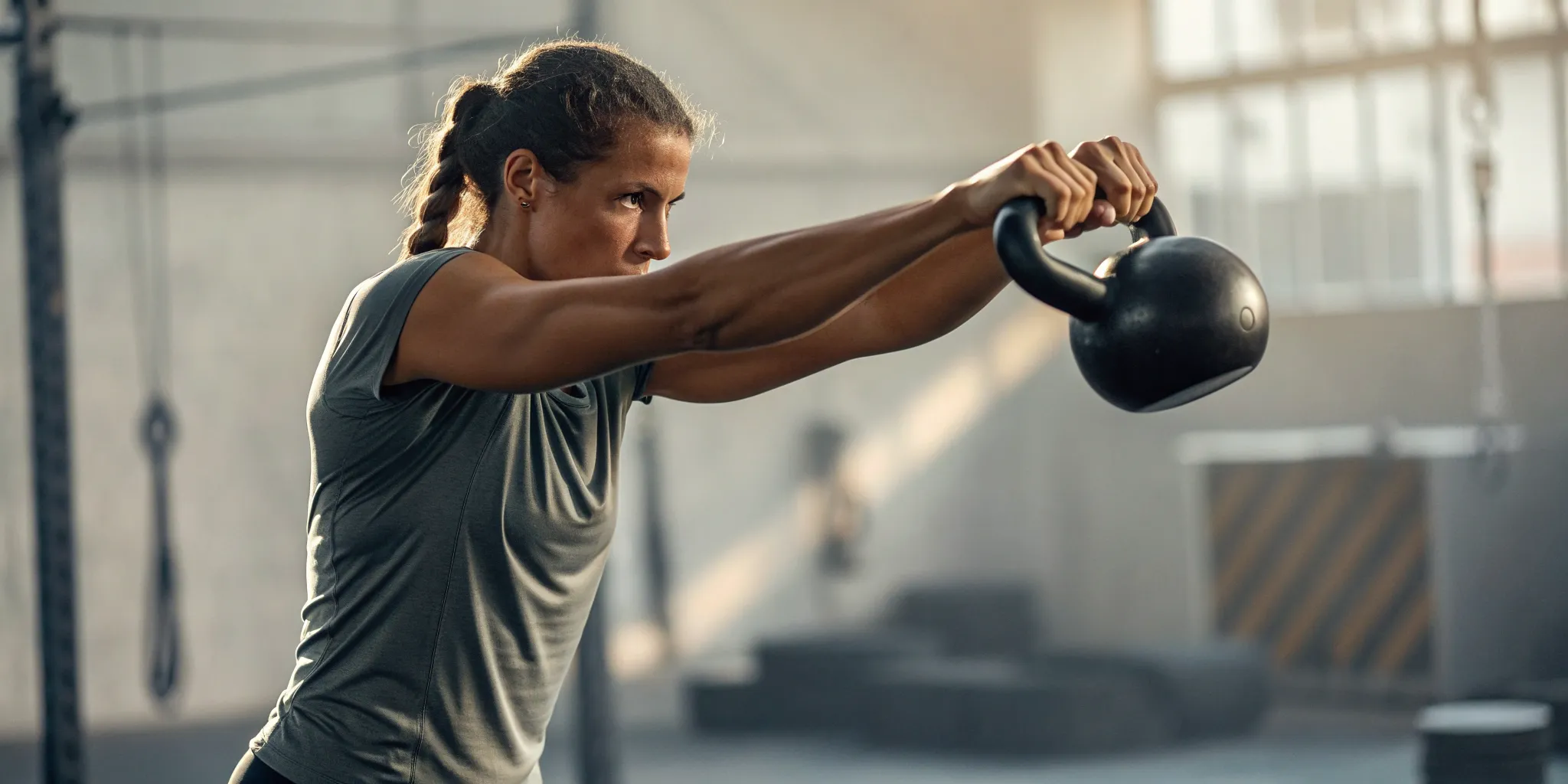
Let’s clear up a common fitness myth: you don’t need to spend hours doing separate workouts for cardio and strength to see results. The secret to transforming your body lies in working smarter, not just longer. Enter the kettlebell swing. This single, dynamic movement is a metabolic powerhouse, designed to build strength in your glutes and hamstrings while sending your heart rate soaring. It’s the ultimate two-for-one exercise. At Armourbody, we build our workouts around movements like this because they deliver serious results. If you’re ready to understand the mechanics behind the kettlebell swing for fat loss, this guide will break down everything you need to know.
Key Takeaways
- Power Your Swing from the Hips, Not Your Arms: The secret to an effective kettlebell swing is the explosive hip hinge. This full-body movement builds functional strength and provides a serious cardio workout by engaging your glutes and hamstrings, not by lifting with your shoulders.
- Focus on Form and Consistency for Safe Results: Choose a weight that feels challenging but allows you to maintain perfect technique. Aim for 2-3 sessions per week to give your body time to recover and get stronger, preventing injury and burnout.
- Pair Your Workouts with Smart Nutrition: Kettlebell swings are a powerful tool for fat loss, but they work best when supported by what you eat. Create a sustainable calorie deficit and prioritize protein to fuel your performance, preserve muscle, and achieve your goals faster.
What is a Kettlebell Swing?
The kettlebell swing is one of the most powerful exercises in your fitness toolkit. It looks simple, but it’s a highly technical, full-body movement that builds explosive power and strengthens you from head to toe. It’s a staple in our Armourbody classes for a reason: it delivers serious results. Understanding the mechanics is the first step to mastering it and getting the most out of every rep.
The Hip Hinge: Your Power Source
Let’s get one thing straight: the kettlebell swing is not an arm exercise. The real magic happens at your hips. The entire movement is driven by a powerful, explosive motion called a hip hinge. The power for the swing comes from your hips and glutes, not your arms. Your arms are mostly just there to guide the kettlebell, acting like ropes connecting you to the weight. This isn't a squat where you bend your knees deeply; it's a sharp backward push of the hips, followed by a powerful forward thrust that sends the kettlebell up to chest height. Mastering this hinge is key.
Muscles You'll Work
Because the swing is a full-body movement, it recruits a ton of muscle with every rep. The primary movers are the muscles in your posterior chain—the powerhouse group running up the entire backside of your body. This includes your glutes, hamstrings, and lower back. Kettlebell swings engage these large muscle groups, which is fantastic for building metabolism-supporting muscle. But it doesn't stop there. Your core has to work overtime to stay braced and stable, while your lats and shoulders engage to control the bell. It’s a true team effort that builds functional, real-world strength.
Why It's Cardio and Strength in One
Here’s why we love the kettlebell swing so much at Armourbody: it’s the ultimate two-for-one exercise. The kettlebell swing is unique because it combines both cardio and strength training benefits into one efficient movement. The explosive, repetitive nature of the swing sends your heart rate soaring, giving you a high-intensity cardiovascular workout. At the same time, you’re moving a significant weight, which builds serious strength in your glutes, hamstrings, and core. This powerful combination is what makes it such an effective tool for fat loss. It’s exactly the kind of high-impact training we build our group fitness classes around.
How Kettlebell Swings Help You Burn Fat
The kettlebell swing is a powerhouse for fat loss because it tackles your goals from multiple angles. It’s not just about the calories you burn during the workout; it’s about turning your body into a more efficient fat-burning machine long after you’ve put the kettlebell down. This single movement combines strength and cardio to build lean muscle and get your heart rate soaring, creating the perfect storm for shedding fat and building a stronger, more powerful physique. At Armourbody, we love incorporating swings into our workouts because they deliver serious results. Let’s break down exactly how this incredible exercise works.
Burn Calories During and After Your Workout
When it comes to efficiency, few exercises can match the kettlebell swing. You can burn up to 20 calories per minute, making it an incredibly effective way to get a lot done in a short amount of time. But the real magic happens after your workout ends. The intensity of kettlebell swings creates an "afterburn effect," scientifically known as excess post-exercise oxygen consumption (EPOC). This means your body continues to burn calories at a higher rate for hours as it works to recover and return to its resting state. So, while you’re rehydrating or getting on with your day, your metabolism is still running high from the work you put in earlier. The benefits of kettlebell swings extend far beyond the 50 minutes you spend in the gym.
The HIIT Effect: Rev Up Your Metabolism
The explosive, powerful motion of a kettlebell swing is essentially a form of high-intensity interval training (HIIT) packed into a single movement. Each swing drives your heart rate up, challenging your cardiovascular system in short, powerful bursts. This is exactly what you want for effective fat loss. This high-intensity effort is fantastic for torching calories quickly. Much like a dedicated HIIT session, a workout centered around swings tells your body to fire up its metabolic rate. This intense work keeps your metabolism humming at a higher speed for hours post-exercise. The kettlebell swing for rapid fat loss is effective precisely because it delivers this powerful metabolic impact with every single rep.
Engage Your Whole Body for Better Results
Kettlebell swings are a full-body exercise, which is a major reason they are so effective for fat loss. The movement is powered by your glutes and hamstrings—some of the largest muscles in your body—but it also requires serious engagement from your core, back, and shoulders to control the weight. Working multiple large muscle groups at once does two important things. First, it requires a ton of energy, which means a higher calorie burn. Second, it builds lean muscle mass across your entire body. The more muscle you have, the more calories your body burns at rest. This combination of cardio and strength training makes kettlebell swings for fat loss a uniquely powerful tool for changing your body composition.
How to Do a Kettlebell Swing (The Right Way)
The kettlebell swing looks simple, but mastering the form is key to getting results and staying injury-free. It’s a powerful, explosive movement that hinges on a specific technique. Once you get the hang of it, you’ll feel the power in every rep. Let’s break down the movement step-by-step so you can swing with confidence. Getting hands-on feedback from a certified coach is the best way to perfect your form, which is something we focus on in every Armourbody class.
Set Up for Success
Your starting position sets the stage for the entire movement. Get this right, and the rest of the swing will feel much more natural.
Stand with your feet slightly wider than your shoulders, with the kettlebell on the floor about a foot in front of you. Hinge at your hips, keeping your back flat and your chest up, and grab the kettlebell handle with both hands. Your shins should be vertical. Pull the kettlebell back between your legs to create momentum. Think of it like you’re hiking a football. This initial setup loads your hamstrings and glutes, preparing them to generate the force needed for the swing.
Master the Hip Drive
This is where the magic happens. The kettlebell swing is not an arm exercise; it’s a powerful hip-driven movement. All the force comes from your glutes and hamstrings.
From the backswing position, explosively drive your hips forward and squeeze your glutes, snapping your body into a standing plank position. This powerful thrust is what propels the kettlebell upward. Your arms are just there to guide the bell, acting like ropes. Let the kettlebell float up to about chest height. Don’t try to lift it with your shoulders. As the bell begins to descend, let gravity do the work and guide it back between your legs, immediately moving into the next rep. The hip hinge is the foundation of this entire exercise.
Avoid These Common Mistakes
A few common errors can rob you of the swing’s benefits and put you at risk for injury. The biggest mistake is turning the swing into a squat. Remember, you’re hinging at the hips, not bending your knees to lower yourself down.
Another frequent error is using your arms and shoulders to lift the weight. If your arms are sore after a set of swings, you’re likely pulling the bell up instead of letting your hips do the work. Keep your arms relaxed. Also, be sure to maintain a neutral spine throughout the movement. Rounding your back, especially at the bottom of the swing, puts unnecessary strain on your lower back. Keep your core engaged and your back flat from start to finish.
Breathe Right and Stay Safe
Your breathing pattern helps you maintain rhythm and power. Exhale sharply at the top of the swing as you thrust your hips forward. Inhale as the kettlebell swings back down between your legs. This pattern helps brace your core and fuels the explosive part of the movement.
As for safety, always keep the kettlebell under control. Don’t let it pull you forward or swing too high. Chest height is a perfect target. It’s okay if the kettlebell handle lightly touches your upper thighs on the backswing—that’s a sign you’re keeping it close to your body. A good starting point is to perform swings for a set amount of time, like 10-12 swings every minute for 10 minutes, as recommended by the Ohio State Medical Center.
How to Choose the Right Kettlebell Weight
Walking up to the kettlebell rack can feel a little intimidating. With so many different weights, how do you know which one is right for you? Choosing the correct weight is one of the most important steps in mastering the kettlebell swing. It’s the key to getting a powerful, effective workout while keeping your body safe. If you go too light, you won’t generate enough momentum to properly engage your hips and glutes. Go too heavy, and your form will break down, putting you at risk for injury.
The right kettlebell should feel challenging but allow you to maintain perfect form through every single rep. It’s about finding that sweet spot where you’re working hard without sacrificing technique. Let’s break down how to find your perfect starting point and know when it’s time to level up.
Guidelines for Your Starting Weight
As a general rule, most women find a great starting point between 8kg (18 lbs) and 12kg (26 lbs). For men, the typical range is between 16kg (35 lbs) and 24kg (53 lbs). But remember, these are just suggestions. Your ideal starting weight really depends on your current fitness level and experience with strength training. The goal is to choose a weight that feels challenging enough to force you to use your hip drive, but not so heavy that you have to muscle it up with your arms. When in doubt, start a little lighter and focus on perfecting the movement. Our coaches at Armourbody can always help you find the right fit.
When to Go Heavier
Once you feel confident in your form and can complete your sets without feeling completely wiped out, it might be time to increase the challenge. This is based on a principle called progressive overload, which is just a technical way of saying you need to gradually make your workouts harder to keep seeing results. You can do this by adding more swings to your sets, shortening your rest periods, or, of course, picking up a heavier kettlebell. Pushing yourself with a heavier weight is what will continue to build strength and keep your metabolism fired up for fat loss. Listen to your body, but don't be afraid to step outside your comfort zone.
How Often Should You Do Kettlebell Swings?
When you find an exercise that delivers results, it’s tempting to do it all the time. But with an intense movement like the kettlebell swing, more isn’t always better. The key is finding the right balance between work and rest to keep making progress without burning out. How often you should do kettlebell swings depends on your fitness level, your goals, and what the rest of your workout routine looks like. Consistency is what truly drives fat loss and strength gains. At Armourbody, we build our classes around this principle, combining high-intensity work with smart programming so you get the best results from every workout.
Your Weekly Workout Plan
For most people, adding kettlebell swings to your workouts two to three times per week is a great target. This frequency gives your muscles enough time to recover and rebuild between sessions, which is when you actually get stronger. Since kettlebell swings are a high-intensity exercise that burns a lot of calories, they are incredibly effective for fat loss. Spacing out your swing sessions—say, on Monday, Wednesday, and Friday—ensures you can give each workout your all. You can make them the centerpiece of a quick HIIT session or weave them into a full-body strength circuit.
Programming for Beginners vs. Advanced
Your experience level will dictate your starting point. If you’re new to kettlebells, focus on mastering the form before adding volume. A great goal for beginners is to perform 3 sets of 10-15 swings. As you get more comfortable, you can try a timed approach, like doing 10 swings every minute for 10 minutes. For more experienced individuals, you can increase the challenge with more reps and sets with less rest. An advanced workout might look like 5 sets of 20-25 swings. This method of gradually increasing the difficulty is a core principle for rapid fat loss and building strength.
The Importance of Rest and Recovery
High-intensity exercises like kettlebell swings create a metabolic demand that lasts long after you’ve put the weight down. This is often called the "afterburn effect," where your body continues to burn extra calories for hours as it recovers. This is one of the biggest benefits of kettlebell swings. But you only get that benefit if you actually give your body time to recover. Rest days are non-negotiable. They allow your muscles to repair, reduce your risk of injury, and prepare you to come back stronger for your next session. Listen to your body—if you’re feeling overly sore or fatigued, take an extra day off.
Add Kettlebell Swings to Your Workouts
The best part about the kettlebell swing is its versatility. You don’t need to build an entire workout around it (though you certainly can). Instead, you can plug it into your existing routine to ramp up the intensity and accelerate your results. Whether you have five minutes or a full hour, there’s a way to make swings work for you.
At Armourbody, we build our classes around efficient, high-energy movements, and the kettlebell swing is a perfect example. It’s a full-body exercise that combines strength and cardio, making it an ideal fit for nearly any training style. Think of it as your go-to tool for adding a metabolic challenge to your workout. Here are a few simple and effective ways to start incorporating swings into your fitness plan.
Use Them in HIIT and Interval Training
High-Intensity Interval Training (HIIT) is all about short bursts of maximum effort followed by brief recovery periods, and kettlebell swings are practically made for it. Because they engage so many muscles at once, swings drive your heart rate up quickly, burning a significant number of calories in a short amount of time. This intensity also triggers a metabolic effect that helps you continue burning calories long after your workout is over.
To try it, set a timer for 10 minutes. Perform kettlebell swings for 30 seconds, then rest for 30 seconds. Repeat this cycle until the timer goes off. This simple format is a powerful way to improve your cardiovascular fitness and tap into the science behind kettlebell swings for fat loss.
Add Swings to Your Circuits
If you already have a strength training circuit you love, adding a kettlebell swing station is a fantastic way to keep your heart rate elevated between sets. Instead of resting completely or walking on a treadmill, you can use swings to maintain intensity and turn your strength workout into a serious calorie-burning session. This approach ensures you’re building muscle and improving your cardio at the same time.
For example, you could structure a circuit with goblet squats, push-ups, and lunges. Between each of those exercises, perform a set of 15-20 kettlebell swings. The swings act as an active recovery, making them a great alternative to traditional cardio machines. The full-body, explosive nature of the swing offers unique benefits of kettlebell swings that you just can’t get from a bike or elliptical.
Try Tabata and Timed Workouts
For a quick and incredibly effective workout, look no further than Tabata. This protocol involves 20 seconds of all-out effort followed by 10 seconds of rest, repeated for eight rounds (a total of four minutes). A kettlebell swing Tabata is a challenging finisher for any workout or a great option when you’re short on time. The intensity is high, but the duration is short, making it a powerful tool for fitness.
Another simple method is an EMOM, which stands for "every minute on the minute." Set a timer for 10 to 12 minutes and perform 10-12 swings at the top of each minute. The remaining time in that minute is your rest. This structure helps you pack in a high volume of quality reps—around 100 swings—for rapid fat loss without feeling completely exhausted.
Pair Your Swings with the Right Nutrition
As powerful as kettlebell swings are, they can’t out-swing a poor diet. To truly see the fat loss results you’re working for, you need to pair your efforts in the gym with smart choices in the kitchen. Think of it this way: your workouts create the demand for change, and your nutrition provides the building blocks for that change to happen. It’s not about restriction or complicated meal plans; it’s about fueling your body correctly so it can burn fat, build muscle, and recover effectively. This synergy between movement and meals is where the real magic happens.
At Armourbody, we see firsthand how a holistic approach transforms bodies and lives. The members who see the most significant results are the ones who commit to their fitness and their nutrition. They understand that what happens in our 50-minute classes is only part of the equation. By focusing on a few key principles, you can make sure the food you eat supports every single swing and helps you reach your goals faster. It starts with creating a sustainable energy balance, getting enough protein to protect your hard-earned muscle, and staying hydrated to keep your body performing at its best. Let’s break down what that looks like.
Create a Sustainable Calorie Deficit
Fat loss happens when you consistently use more energy than you consume. This is called a calorie deficit. The key word here is “sustainable.” Drastic calorie cutting can leave you feeling tired, hungry, and unable to perform your workouts, which is counterproductive. Instead, aim to eat just slightly less than your body needs to maintain its current weight. A great way to get a handle on this is to track your food intake for a week or two. This isn’t about judgment; it’s about gathering data to understand your current habits and find small, manageable ways to create that gentle deficit.
Eat Enough Protein to Keep Muscle
When you’re in a calorie deficit, your body looks for energy sources. To ensure it pulls from fat stores instead of breaking down muscle tissue, you need to eat enough protein. Preserving muscle is crucial because it keeps your metabolism fired up—the more muscle you have, the more calories you burn at rest. Aim to include a quality protein source with every meal, like chicken, fish, eggs, tofu, or legumes. This will not only help you maintain muscle mass while you lose fat but also keep you feeling fuller for longer, making it easier to stick to your plan.
Stay Hydrated for Better Recovery
Hydration is one of the most overlooked components of a successful fitness plan. Water is essential for just about every bodily function, including muscle repair and energy production. Being even slightly dehydrated can hurt your performance during a tough kettlebell session and slow down your recovery afterward. Make it a habit to drink water consistently throughout the day, not just when you feel thirsty. Swapping sugary drinks for water is an easy win that cuts empty calories and helps your body function optimally. Proper hydration will help you feel your best and get the most out of every workout.
Common Kettlebell Swing Mistakes to Avoid
The kettlebell swing is an incredible exercise, but its power comes with a catch: you have to do it right. To get the fat-burning, muscle-building results you’re looking for and stay off the sidelines with an injury, it’s crucial to sidestep a few common mistakes. Let’s walk through the big ones so you can swing with confidence.
Don't Overtrain
When you start doing swings and feel that incredible full-body burn, it’s tempting to think more is always better. But kettlebell swings are a high-intensity exercise, and your body needs time to recover and rebuild. While they burn a ton of calories, lasting fat loss also depends on your nutrition and maintaining a healthy caloric deficit. Pushing yourself to do swings every single day can lead to burnout or injury, which will only set you back. Instead, focus on consistency over volume. A few well-planned, intense sessions a week will give you far better results than daily, half-hearted efforts.
Focus on Form, Not Just Reps
This is the golden rule of kettlebell swings. It’s easy to get caught up in chasing a higher number of reps, but sloppy form won’t get you results—it’ll get you hurt. The power for the swing must come from an explosive hip hinge, not from lifting the bell with your arms and shoulders. Using your arms is a fast track to a lower back injury. The best way to learn is to get feedback from a certified instructor who can correct your form in real-time. If you’re in Atlanta, come join a class at Armourbody. Our coaches will make sure you master the movement safely from day one.
Understand Spot Reduction Isn't Real
Many people pick up a kettlebell hoping to melt fat directly off their stomach. Unfortunately, our bodies don’t work that way. You can’t choose where you lose fat from; this concept is known as spot reduction, and it’s a long-standing fitness myth. Kettlebell swings are fantastic for burning calories and encouraging overall fat loss, which will absolutely lead to a leaner midsection over time. But you’ll also lose fat from your arms, legs, and everywhere else. So, trust the process. A consistent swing routine, paired with smart nutrition, will help you reduce your total body fat and build a strong, toned physique.
More Than Just Fat Loss: Other Kettlebell Swing Benefits
While the kettlebell swing is famous for its fat-torching abilities, that’s only part of the story. This single movement is a powerhouse that delivers a full spectrum of fitness benefits, making it one of the most efficient exercises you can do. Think of fat loss as the main event, with some incredible opening acts that build a stronger, more resilient body. From developing real-world strength that makes everyday life easier to improving your heart health and posture, the kettlebell swing does more than just change how you look—it changes how you move and feel.
Build Functional Strength and Power
Functional strength is all about building power that translates directly to your daily life, like hoisting a heavy suitcase into an overhead bin or lifting your kid off the floor. The kettlebell swing is a masterclass in this. The explosive power for the swing comes from your hips, not your arms, training your body to generate force from your powerful glutes and hamstrings. This movement pattern strengthens your entire posterior chain—the network of muscles on the backside of your body—which is fundamental for athletic power, speed, and preventing lower back pain. It teaches your body to work as one cohesive unit, building a foundation of strength that supports you in and out of the gym.
Improve Your Heart Health
If you think you need to log miles on a treadmill to get a good cardio workout, think again. The kettlebell swing is an incredibly demanding cardiovascular exercise. Because it engages so many large muscle groups at once, your heart has to work hard to pump oxygen-rich blood throughout your body. Research shows that kettlebell swings can burn up to 20 calories per minute, putting them on par with running. In fact, one study found that a 12-minute session of swings was enough to get participants' heart rates up to 85% of their maximum. This type of high-intensity work is exactly what you need to build a stronger, more efficient cardiovascular system.
Develop Better Posture and a Stronger Core
Most of us spend hours a day hunched over a desk or phone, which can lead to poor posture and back pain. The kettlebell swing is a powerful antidote. To perform the swing correctly, you must maintain a straight, neutral spine while bracing your entire core. This strengthens the deep abdominal muscles and the erector spinae muscles that support your spine, essentially building a natural corset of strength. This helps improve your postural awareness and stability, protecting your back from injury. A strong, stable core is the centerpiece of all movement, and the kettlebell swing is one of the best ways to build it.
Master the Kettlebell Swing at Armourbody
Reading about the kettlebell swing is one thing, but feeling its power in a high-energy environment is another. At Armourbody, we don’t just add kettlebell swings to our workouts; we teach you how to master them. Our expert coaches break down the movement step-by-step, ensuring you build a strong foundation centered on the hip hinge. We focus on form first, so you can generate maximum power safely and effectively. When you feel that perfect, weightless float at the top of the swing, you’ll know you’ve nailed it.
Learning this fundamental move in one of our classes means you get real-time feedback in a supportive setting. Instead of guessing if you’re doing it right at home, you’ll have a coach guiding you and a community of people working hard right alongside you. That shared energy makes all the difference when you’re pushing through a tough set. We believe that mastering the basics is the fastest way to see real, lasting results.
Once you have the technique down, you can truly harness the fat-burning potential of the kettlebell swing. A powerful swing can burn up to 20 calories per minute, making it one of the most efficient exercises you can do. By integrating kettlebell swings into our signature strength and cardio circuits, we help you build lean muscle and torch calories long after your workout is over. If you’re ready to learn from the best and see what you’re capable of, we’re ready for you. Come find out more about our community and see the difference for yourself.
Related Articles
Frequently Asked Questions
I've heard kettlebell swings can be bad for your back. Is that true? This is a common and important concern. When done correctly, the kettlebell swing is actually fantastic for building a stronger, more resilient back. The movement strengthens your entire posterior chain, including the muscles that support your spine. The risk comes from improper form. If you round your back or try to lift the kettlebell with your arms and shoulders instead of driving with your hips, you can put your lower back in a vulnerable position. That’s why we emphasize mastering the hip hinge first—it’s the key to a safe and powerful swing.
What’s the biggest difference between a kettlebell swing and a squat? This is the most common point of confusion, but the two movements are fundamentally different. Think of a squat as an up-and-down motion where you bend your knees deeply to lower your hips toward the ground. A kettlebell swing, on the other hand, is a forward-and-back motion. It’s a sharp hinge at your hips, pushing your glutes backward while keeping your shins mostly vertical. The power comes from explosively thrusting your hips forward, not from bending your knees.
Why do my arms get tired before my legs or glutes? If your arms are burning out first, it’s a clear sign that you’re trying to lift the kettlebell instead of letting your hips do the work. Your arms should act like ropes, simply guiding the bell as it floats up from the powerful hip snap. All the effort and resulting fatigue should be centered in your glutes and hamstrings. Try to relax your grip and shoulders, and focus entirely on driving the movement from your lower body.
How soon can I expect to see fat loss results from doing swings? While kettlebell swings are incredibly effective for burning calories, results depend on a few factors. Consistency is the most important piece of the puzzle. Incorporating swings into your routine two to three times a week, paired with a nutrition plan that supports your goals, is the fastest way to see changes. There's no magic timeline, but because swings build metabolism-supporting muscle while providing a major cardio workout, they are a powerful tool for accelerating your fat loss journey.
Can I get the same results with a really light kettlebell? While it’s smart to start with a lighter weight to master the form, you won’t get the full fat-burning benefits if the kettlebell is too light. The swing relies on momentum. A challenging weight forces you to generate explosive power from your hips, which is what sends your heart rate soaring and engages those large muscle groups. If the weight is too light, you’ll be tempted to just lift it with your arms, turning it into a simple front raise and missing the entire point of the exercise.