

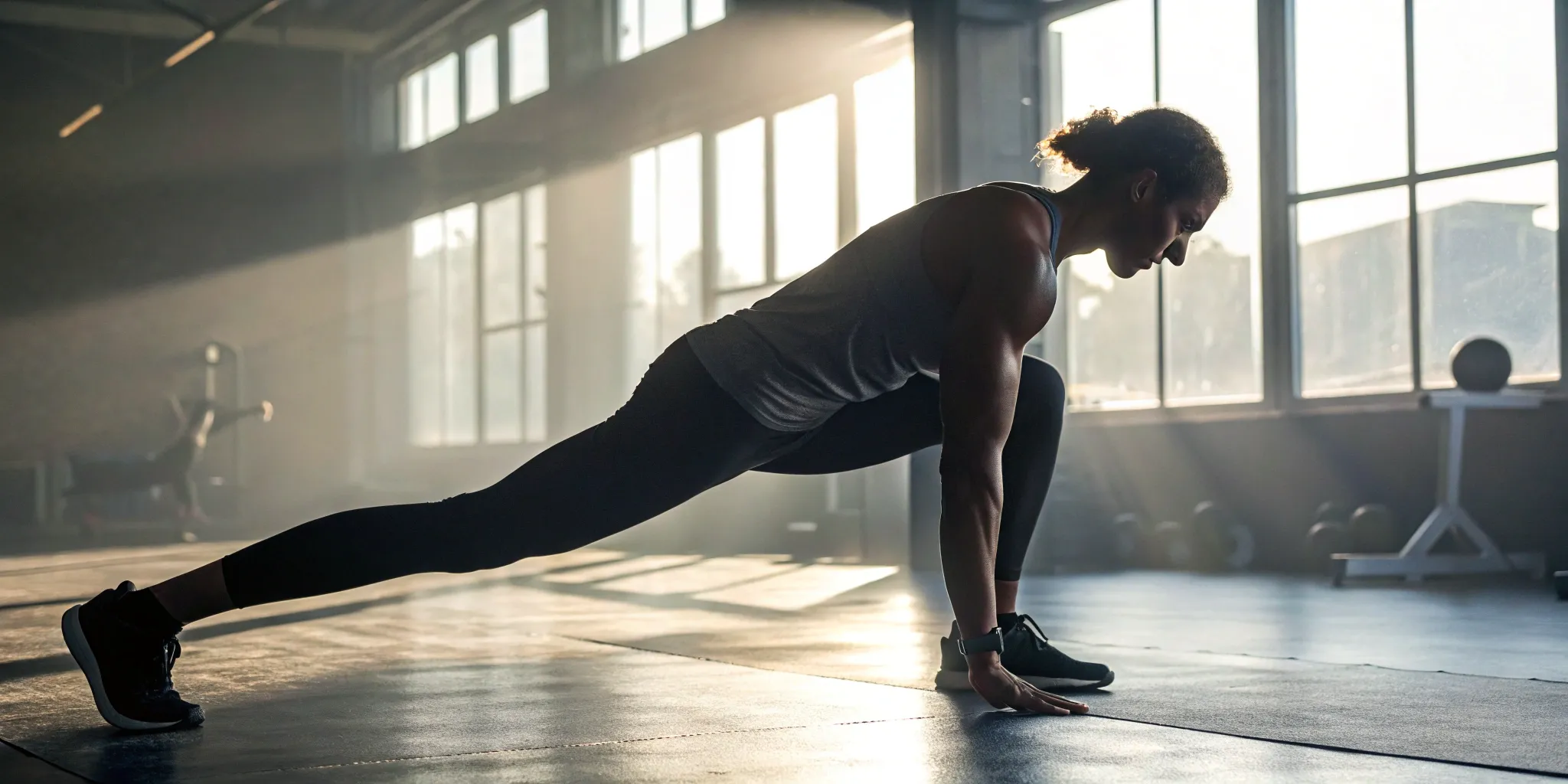
When you hear "lunge," you probably picture the classic forward step. But that’s just the beginning. Think of the lunge as a whole family of movements, each designed to challenge your body in a new way. From reverse lunges that are easier on the knees to lateral lunges that target your inner thighs, there’s a variation for every goal. Mixing up your lunges exercise routine keeps your muscles guessing and helps you build well-rounded, functional strength. We’ll explore the best variations to help you build power, improve stability, and keep your workouts feeling fresh and effective.
Key Takeaways
- Nail Your Form Before Adding Weight: Focus on keeping your core tight, your chest up, and your front knee tracking over your foot. A solid foundation prevents injury and ensures you’re working the right muscles, making every rep more effective.
- Build Strength for Life, Not Just the Gym: Lunges train your body in a pattern you use every day, improving your balance and stability for real-world activities. This functional strength makes everything from climbing stairs to picking things up feel easier and safer.
- Choose Variations to Match Your Goals: Use different lunges to challenge your body in new ways. Try reverse lunges to target your glutes, lateral lunges to improve side-to-side stability, or plyometric lunges to add a high-intensity cardio element to your workout.
What Are Lunges and How Do They Work?
At its core, a lunge is a fundamental movement pattern where you step forward with one foot and lower your hips until both knees are bent at about a 90-degree angle. Your front knee should be directly above your ankle, and your back knee should hover just off the floor. It might sound simple, but this single-leg exercise is a powerhouse for building functional strength, which is why you’ll see it so often in our Armourbody classes.
Lunges are considered a compound exercise, meaning they work multiple muscle groups and joints simultaneously. This makes them incredibly efficient for building muscle and burning calories. Instead of isolating one tiny muscle, you’re training your lower body and core to work together as a coordinated unit. This not only helps you get stronger for your workouts but also translates directly into better movement in your everyday life, whether you’re climbing stairs or picking something up off the floor. Mastering the lunge is a key step in building the strong, capable body you’re working toward.
The Main Muscles Lunges Work
When you perform a lunge, your legs are doing the heavy lifting, and three major muscle groups get the most attention. First are your quadriceps, the large muscles on the front of your thighs, which work hard to extend your knee as you push back to the starting position. Next up is your gluteus maximus—the largest muscle in your butt—which helps drive the movement and stabilize your hips. Finally, your hamstrings), located on the back of your thighs, work alongside your glutes to control your descent and power you back up. Together, these muscles create the strong, defined look many people are after while building serious lower-body power.
The Supporting Muscles You'll Engage
While your legs are the stars of the show, a proper lunge is truly a full-body effort. To stay balanced and maintain good posture, you have to engage your supporting muscles, especially your core. Your abdominal and lower back muscles fire up to keep your torso stable and upright, preventing you from wobbling or leaning too far forward. This is why lunges are such a fantastic exercise for building functional core strength. Additionally, smaller stabilizing muscles in your hips and around your ankles work overtime to keep you steady on one leg. This teamwork is what makes the lunge so effective for building a body that’s not just strong, but also stable and coordinated.
Why Add Lunges to Your Workout?
So, you see lunges in almost every workout, from our strength circuits at Armourbody to at-home fitness videos. There’s a good reason for that. Lunges are a powerhouse move that does more than just work your legs. They’re a fundamental movement pattern that builds a strong, functional, and resilient body. By isolating one leg at a time, you challenge your muscles and stability in a unique way, leading to balanced strength and better coordination. If you want to get stronger, move better, and see real results from your training, making lunges a staple in your routine is a non-negotiable.
Build Lower Body Strength and Muscle
Lunges are one of the most effective ways to build serious lower-body strength. Because they are a compound exercise, they recruit multiple muscles and joints at once, making your workouts incredibly efficient. Each time you lunge, you’re firing up your glutes, quads, and hamstrings, which are the largest muscles in your body. Working these big muscle groups is key to burning fat and building the lean muscle that powers you through our high-intensity classes. Consistent lunging builds balanced strength on each side of your body, correcting imbalances and creating a solid foundation for all other lifts and movements.
Improve Your Balance and Stability
Ever feel a little wobbly during a lunge? That’s a good thing! It means your core and stabilizer muscles are working hard to keep you upright. Lunges are a unilateral exercise, meaning they train one side of your body at a time. This forces your deep core muscles—like your abs, obliques, and lower back—to engage and keep you steady. Improving your balance and stability doesn't just help you hold a perfect lunge; it translates to better control in every other exercise you do and reduces your risk of injury both in and out of the gym.
Move Better in Everyday Life
The strength you build at the gym should make your daily life easier, and lunges are a perfect example of functional fitness in action. Think about it: the lunge movement mimics so many things you do every day, like kneeling to tie your shoe, picking up something heavy, or even just walking up a steep flight of stairs. By strengthening this movement pattern, you’re training your body to perform these daily tasks with more strength, efficiency, and ease. This is how you build a body that’s not just gym-strong, but life-strong.
Level Up Your Athletic Performance
If you play sports or just love to push your limits, lunges are your secret weapon for better performance. The single-leg power and stability you develop are crucial for any activity that involves running, jumping, or changing direction quickly. Sports like tennis, basketball, and soccer all rely on the same explosive, single-leg movements you practice in a lunge. Adding them to your routine helps you generate more power, improve your agility, and build the endurance needed to stay strong through the final push. It’s a direct way to improve your conditioning and become a more well-rounded athlete.
How to Do a Lunge with Perfect Form
The lunge is a powerhouse move for building lower-body strength, but only if you do it right. Nailing the form not only helps you get the most out of every rep but also keeps your joints safe and happy. Whether you’re just starting out or a seasoned pro in our Atlanta fitness classes, a quick form check is always a good idea. Let’s break down exactly how to perform a lunge with confidence and precision.
Your Step-by-Step Guide
Think of the lunge as a simple, four-part movement. It’s a bodyweight exercise that primarily targets your quads, hamstrings, and glutes. Ready to give it a try?
- Find Your Stance: Start by standing tall with your feet comfortably under your hips and your core engaged.
- Step Forward: Take a controlled step forward with one foot, about two to three feet.
- Lower Down: Bend both knees to lower your body toward the floor. Stop when your front knee forms a 90-degree angle and your back knee hovers just above the ground.
- Push Back: Drive through your front foot to push yourself back to the starting position. Repeat on the other side.
This fundamental lunge exercise is the foundation for many other variations you’ll encounter.
Nailing Your Knee and Foot Alignment
Proper alignment is everything when it comes to lunges. The biggest thing to watch is your front knee. As you lower down, make sure your front knee tracks directly over your foot. Don't let it collapse inward or drift outward. It should also stay behind or directly in line with your toes—never push it past them. This protects your knee joint from unnecessary strain. If you’re working out at home, try doing lunges next to a mirror. It’s a great way to check your form and make sure everything is lined up correctly.
Keeping Your Core Tight and Posture Strong
A lunge isn’t just a leg exercise; it requires your whole body to work together. To stay balanced and stable, you need to engage your core. Before you step forward, brace your abdominal muscles as if you’re about to get punched in the stomach (gently!). As you lower into the lunge, keep your torso upright and your back straight. Avoid leaning too far forward or arching your back. A strong, neutral spine not only protects you from injury but also ensures the work stays focused on your legs and glutes, where it belongs.
The Best Lunge Variations for Your Goals
Once you’ve mastered the basic lunge, you can start exploring variations that target different muscles and challenge your body in new ways. Think of these variations as tools in your fitness toolbox—each one has a specific job. Whether you want to build explosive power, improve your stability, or focus on your glutes, there’s a lunge for that. Mixing these into your routine keeps your workouts interesting and ensures you’re building well-rounded strength. Let’s break down some of the best lunge variations and what they can do for you.
Forward Lunges
The forward lunge is the classic for a reason. It’s a fantastic all-around lower-body builder that targets your quads, glutes, and hamstrings. Because it requires you to control your momentum as you step forward and push back, it’s a great way to work on your deceleration and power. This move is considered a compound exercise because it engages multiple muscles and joints simultaneously, making your workout incredibly efficient. If you’re looking for a foundational move to build strength and muscle in your legs, the forward lunge is a perfect place to start. It directly translates to better performance in other athletic movements, from running to jumping.
Reverse Lunges
If you find forward lunges a bit wobbly or tough on your knees, the reverse lunge is your new best friend. Stepping backward instead of forward is easier on your joints and provides a more stable base, which is great if you’re working on balance. This variation puts more emphasis on your glutes and hamstrings, making it an excellent choice for building strength in your posterior chain. The benefits of reverse lunges also include greater core engagement as you work to keep your torso upright throughout the movement. It’s a subtle shift from the forward lunge, but it makes a big difference in how the exercise feels and which muscles do the most work.
Lateral Lunges
Most of our daily movements are forward and backward, but strengthening our side-to-side motion is crucial for stability and injury prevention. That’s where the lateral, or side, lunge comes in. This variation targets your inner and outer thighs (adductors and abductors) and glutes in a way that other lunges don’t. By stepping out to the side, you’re also improving your hip mobility and flexibility. Lateral lunges are fantastic for athletes who need to change direction quickly, but they’re equally important for anyone looking to build balanced, functional strength for everyday life. They help create stability in the hips and knees, protecting you during all kinds of activities.
Walking Lunges
Ready to make your lunges more dynamic? Walking lunges turn a stationary exercise into a movement that challenges your coordination, balance, and cardiovascular endurance. Instead of returning to the start position, you continuously move forward with each lunge, flowing from one leg to the next. This variation keeps your core, hips, and glutes constantly engaged as you stabilize your body with every step. Walking lunges are a staple in high-intensity workouts because they get your heart rate up while building serious lower-body strength. They mimic natural movement patterns, making you stronger and more efficient in everything you do.
Curtsy Lunges
If your goal is to specifically target and strengthen your glutes, look no further than the curtsy lunge. This variation involves stepping one leg back and across the other, as if you were doing a curtsy. This diagonal pattern activates your gluteus medius—a key muscle on the side of your hip that helps with stability and power. Strong glutes aren't just for aesthetics; they play a vital role in maintaining good posture and can help prevent back and knee pain. The curtsy lunge is a fantastic way to add variety to your leg day and build a stronger, more sculpted backside.
Plyometric Lunges
For those who want to take the intensity to the next level, the plyometric lunge is the ultimate challenge. Also known as a split squat jump, this advanced move involves explosively jumping and switching your feet in mid-air, landing back in a lunge position. This is a powerful exercise for developing lower-body power, speed, and agility. Plyometric lunges) demand a high level of strength, balance, and coordination, making them a perfect fit for high-intensity interval training (HIIT). They’ll get your heart pounding and your muscles burning, delivering serious results in a short amount of time. Master the other variations before giving this one a try.
Common Lunge Mistakes to Avoid
The lunge looks straightforward, but a few small errors can reduce its effectiveness and even put you at risk for injury. Because it involves balance, coordination, and strength, there are several places where form can break down. These mistakes aren't just for beginners; even experienced athletes can develop bad habits over time. Getting the form right means you’ll build strength safely and see results faster. Let's break down a few common slip-ups to watch for. Mastering these details is key to getting the most out of every single rep. At Armourbody, our coaches are always watching your form to provide real-time feedback, but building your own awareness is the first step toward perfecting your movement and owning your workout.
Letting Your Knee Cave In
One of the most frequent mistakes is allowing your front knee to collapse inward as you lower down. When this happens, your knee is no longer tracking in a straight line over your foot, which can lead to poor alignment and strain the joint. This often happens when your glute muscles aren't firing properly to stabilize your hip. To fix this, actively think about keeping your front knee aligned with your second and third toes. You might even need to gently press your knee outward to keep it from caving in. Focusing on proper knee alignment not only protects you from injury but also ensures the right muscles are doing the work.
Losing Your Balance
Feeling wobbly during a lunge is incredibly common, but it’s usually a sign that your stance is off. Stepping too far forward or backward can throw off your center of gravity and make it difficult to stay stable. Another common issue is placing your feet as if you're on a tightrope. Instead, make sure your feet are hip-width apart to create a wider, more stable base. Find a stride length that feels controlled and powerful, where your front shin is roughly vertical at the bottom of the lunge. If you’re still feeling unsteady, pick a spot on the wall in front of you and keep your eyes fixed on it. This simple trick can dramatically improve your balance.
Forgetting Your Core and Posture
A lunge is a full-body movement, not just a leg exercise. If you let your core go soft, you’ll likely lean too far forward or arch your back, which compromises your stability and reduces the exercise's power. Before you even begin to lower down, engage your core by bracing your abdominal muscles—imagine you’re about to be poked in the stomach. Keep your torso upright, your chest proud, and your shoulders pulled back and down. Maintaining a strong, engaged core creates a solid foundation for the entire movement, allowing your legs to generate more force while protecting your lower back from unnecessary strain.
Not Going Low Enough
In a fast-paced class, it's tempting to rush through reps, but this often leads to shallow lunges that don't deliver the full benefits. To truly work your glutes and quads, you need to use a full range of motion. This means lowering your body until your front thigh is parallel to the floor and your back knee is hovering just an inch or two above it. If you’re stopping high, you’re missing out on significant muscle activation. Slow down and control your descent. If you're unsure about your depth, try lunging next to a mirror to check your form. The goal is to feel a deep stretch in the hip flexor of your back leg and a powerful engagement in the glute of your front leg.
How to Safely Progress Your Lunges
Ready to take your lunges to the next level? The key to getting stronger without getting sidelined is smart progression. It’s all about building a solid foundation first and then gradually adding challenges that push your limits safely. Whether you're just starting out or you're a seasoned pro in our Armourbody classes, there's always a way to make your lunges work harder for you. Let's walk through how to move from the basics to more advanced variations, adding weight and intensity along the way.
Starting Points for Beginners
Before you try any fancy variations, it's essential to master the basic forward lunge. Nailing the form here is your ticket to preventing injuries and building real strength. When you step forward, focus on creating a 90-degree angle with your front knee, making sure it stays aligned with your ankle and doesn't push past your toes. Using a mirror can be a game-changer for checking your alignment. Once you can do a set of bodyweight lunges with perfect form, you’ll have the foundational strength needed to move on.
How to Add Weight and Resistance
Once you feel confident and stable in your bodyweight lunge, it's time to add some resistance. This is how you'll really start to build muscle and increase the intensity. You have a few options here. You can hold dumbbells or kettlebells in each hand, or for a bigger challenge, place a barbell across your shoulders. Start with a lighter weight to ensure you can maintain your form, and then gradually increase it as you get stronger. This simple addition turns a basic move into a serious strength-building exercise).
Advanced Variations to Challenge Yourself
If you're ready to really test your power and stability, it's time to explore some advanced lunge variations. Plyometric lunges, also known as split squat jumps, are a fantastic way to add an explosive, cardio-focused element by jumping between lunge positions. Want to fire up your core? Try adding a torso twist to your lunge, which challenges your balance and strengthens your obliques. These dynamic movements not only build muscle but also improve your coordination and functional fitness for everyday life.
How Lunges Fit Into Your High-Intensity Training
At Armourbody, our workouts are all about efficiency and results. We combine strength and cardio in every 50-minute class to help you get stronger, faster. Lunges are a staple in our programming because they fit perfectly into this high-intensity model. They’re incredibly versatile—you can load them up with weight for a strength circuit or speed them up for a heart-pumping cardio interval.
Because lunges are a compound exercise, they work multiple muscle groups at once, giving you more bang for your buck in every rep. This means you’re building functional strength that translates directly into your daily life, from carrying groceries to chasing your kids around the park. Whether we’re doing them with dumbbells in a strength block or as part of a dynamic warm-up, lunges are a key player in helping you build a powerful, resilient body. They challenge your balance, fire up your core, and build serious lower-body strength, making them an essential part of any effective training plan. You'll find them woven into our workouts because they prepare your body for the dynamic, multi-directional movements we do every day, both in and out of the gym. They are foundational for building the kind of strength that feels as good as it looks.
Adding Lunges to Strength Circuits
When the goal is building muscle, lunges are one of the best tools in our arsenal. During our strength circuits, you’ll often find lunge variations programmed to target your glutes, quads, and hamstrings. By adding weight with dumbbells or kettlebells, we increase the resistance and force your muscles to adapt and grow stronger. This unilateral (single-leg) movement also exposes and corrects strength imbalances between your legs, leading to better overall stability and power. We incorporate them into our classes to ensure you’re building a balanced, functional foundation for all your fitness goals.
Pairing Lunges with Cardio Intervals
Lunges aren’t just for building strength—they’re fantastic for getting your heart rate up, too. By turning a standard lunge into a plyometric movement, like a jump lunge, we can transform it into a high-intensity cardio exercise. This explosive variation demands power, coordination, and endurance, making it a perfect fit for our cardio intervals. Even bodyweight walking lunges performed at a steady pace can challenge your cardiovascular system. Plus, the core strength and stability you build from lunges help you move better and reduce the risk of injury during other fast-paced movements in class.
How Often to Lunge (and How to Recover)
Consistency is everything when it comes to seeing results. To build and maintain muscle, a good general guideline is to aim for 2 to 3 sets of 8 to 12 lunges per leg. The great thing about joining our group classes is that we handle the programming for you, ensuring you’re working your lower body effectively without overdoing it. Recovery is just as important as the workout itself. Listen to your body, stretch after class, and prioritize rest days. This gives your muscles time to repair and rebuild, so you can come back to your next session stronger than before.
Which Lunge Variation Is Right for You?
The best lunge for you is the one you can do with solid form. Whether you’re stepping into the gym for the first time or you’re a seasoned pro, there’s a lunge variation that will challenge you in all the right ways. The key is to start where you are and progress safely. By choosing the right modification, you can build a strong foundation, prevent injury, and keep making progress toward your goals.
Think of it as a roadmap. You start with the basics to master the movement pattern, then you can add complexity, weight, or explosive power as you get stronger and more confident. This approach ensures you’re always working effectively, whether your goal is to build muscle, improve balance, or add intensity to your circuits. We’ll walk through the best options for every fitness level, so you can find the perfect fit for your workout today and know exactly where to go next.
Modifications for Beginners
If you’re new to lunges, your main goal is to master the form. Start with the basic forward lunge, as it’s best to learn the movement correctly before trying more difficult versions. Focus on keeping your chest up, your core engaged, and your front knee aligned over your ankle. Don’t worry about how low you can go at first. If you can’t lower your back knee to a 90-degree angle, just go as low as you can comfortably while maintaining good posture. You can even hold onto a wall or a stable surface for balance. The goal is quality over quantity, building the strength and stability you need to advance.
Intermediate Progressions
Once you’ve mastered the basic lunge and can perform it with confidence, it’s time to add a challenge. A great next step is to incorporate weights. Holding dumbbells in each hand or a kettlebell at your chest increases the resistance, helping you build more strength. You can also try Walking Lunges, which are fantastic for improving your balance and coordination as you move forward. This variation works your core, hips, and glutes, and the dynamic movement better translates to everyday activities and sports. It’s the perfect way to prepare your body for more complex and high-intensity exercises.
High-Intensity Options for Advanced Training
Ready to really push your limits? Plyometric lunges, also known as split squat jumps, are an advanced variation where you jump explosively to switch between lunge positions. This move will send your heart rate soaring while building serious power in your legs. To make any lunge variation harder, you can also increase the load significantly. Try holding heavier dumbbells or kettlebells, or place a barbell across your shoulders) for the ultimate strength challenge. These advanced options are perfect for integrating into the high-intensity circuits we love at Armourbody, helping you burn fat and build powerful, lean muscle.
How Lunges Transform Your Daily Movement
The work you put in at the gym should make your life outside the gym better. That’s the whole point, right? Lunges are a perfect example of functional fitness in action. They mimic many of the movements you do every single day without even thinking about it. By strengthening your legs, core, and stabilizer muscles in this specific pattern, you’re not just building a stronger lower body—you’re investing in better movement for the long haul. From carrying groceries to keeping up with your kids, the strength and stability you build with lunges directly translate into a more capable, resilient body.
Making Daily Activities Easier
Think about how many times a day you bend down on one knee to tie your shoe, pick something up, or get something out of a low cabinet. Each of those movements is essentially a lunge. When you practice lunges in your workouts, you’re making those everyday tasks smoother and safer. Stronger glutes and quads mean you can push yourself back up with ease, and improved balance means you’re less likely to wobble or strain your back. Lunges help you move better in your daily life, turning routine activities like climbing stairs or kneeling in the garden into effortless motions.
Improving Your Mobility and Flexibility
If you spend a good portion of your day sitting at a desk, your hips are probably feeling it. All that sitting can cause your hip flexor muscles to become tight, leading to stiffness and even lower back pain. The lunge is a fantastic antidote. As you lower into a lunge, you create a deep, active stretch through the hip flexor of your back leg. Regularly performing lunges helps lengthen these tight muscles, which can seriously improve your hip flexibility. This increased range of motion makes everything from squatting to simply walking feel more fluid and comfortable.
Building Better Movement Habits for Life
One of the most powerful aspects of the lunge is that it’s a unilateral exercise—meaning it works one leg at a time. Most of us have a dominant side, which can lead to muscle imbalances over time. Lunges force each leg to pull its own weight, helping to even out strength discrepancies between your right and left sides. Correcting these imbalances is key to preventing injuries and building a more symmetrical, functional body. By training your body to move efficiently one side at a time, you’re creating better movement patterns that will support you for years to come.
Related Articles
- 6 Effective Low Impact Exercises for Weight Loss
- Best Total Body Workout for Strength & Fat Loss Results
- The Best Total Body Workout: A Beginner's Guide — ARMOURBODY
- HIIT Exercises List & Guide: Burn Fat Fast Workouts
- Ultimate HIIT Exercises List for a Full-Body Blast — ARMOURBODY
Frequently Asked Questions
Why do my knees hurt when I do lunges? Knee pain during lunges is almost always a sign that your form needs a small adjustment. The most common issue is letting your front knee travel too far forward, past your toes, which puts pressure on the joint. Another culprit is allowing your knee to cave inward instead of tracking in a straight line over your foot. Try focusing on stepping back into a reverse lunge, which is often gentler on the knees, and really concentrate on keeping your front shin vertical and your knee stable.
Which lunge variation is best for targeting my glutes? If you want to focus specifically on your glutes, the curtsy lunge and the reverse lunge are your best options. The reverse lunge places more emphasis on your glutes and hamstrings to control the movement and push you back to the start. The curtsy lunge, with its cross-body motion, is fantastic for hitting the gluteus medius, which is the muscle on the side of your hip that helps with stability and gives your glutes a fuller shape.
I feel really off-balance during lunges. How can I fix that? Feeling wobbly is completely normal when you're starting out! The quickest fix is to check your foot placement. Instead of stepping directly in front of your back foot like you're on a tightrope, imagine you're on railroad tracks. Keep your feet about hip-width apart as you lunge to create a wider, more stable base. Also, remember to brace your core muscles tightly throughout the entire movement; a strong core is your foundation for good balance.
Are lunges or squats better for building leg strength? This is a great question, and the answer is that they're both essential for different reasons. Squats are fantastic for building overall lower-body strength and allow you to lift heavier weight. Lunges, on the other hand, are a unilateral exercise, meaning they train one leg at a time. This is incredibly effective for correcting strength imbalances between your legs, improving your stability, and building functional strength that translates more directly to activities like running and climbing stairs. A great routine includes both.
How do I know when I'm ready to add weight to my lunges? You should feel completely confident with your bodyweight form before adding weight. A good rule of thumb is when you can comfortably perform 10 to 12 reps on each leg with perfect form—meaning your chest is up, your core is tight, and you’re using a full range of motion without losing your balance. Once you hit that point, start with a light pair of dumbbells to see how it feels, and then you can gradually increase the weight from there.