

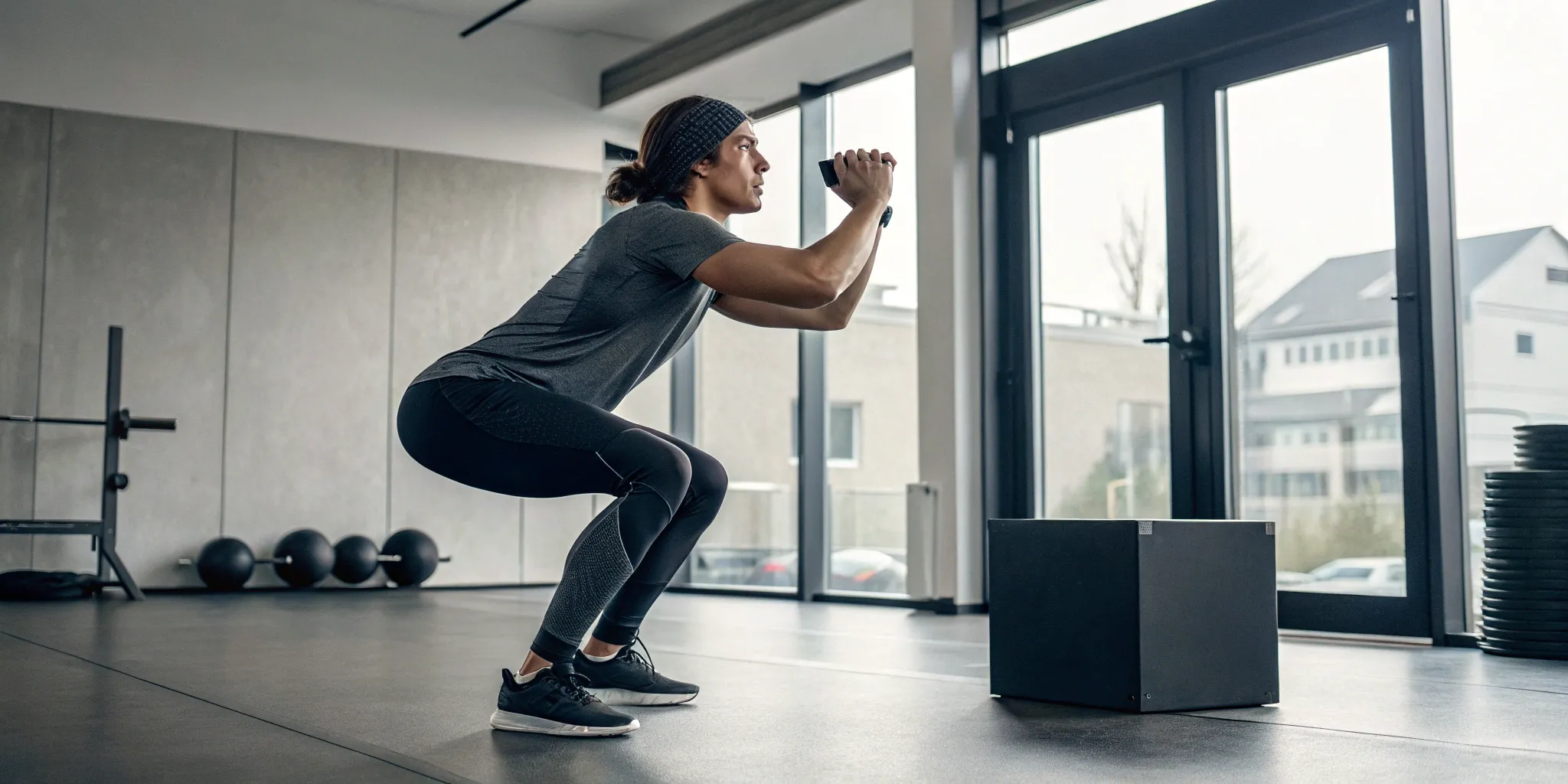
We all want workouts that deliver the biggest results in the shortest amount of time. If you're looking for an exercise that truly does it all, the squat is your answer. It’s the ultimate multi-tasker. While it’s famous for building strong glutes and legs, it also engages your core, back, and hamstrings, making it a full-body calorie-burning machine. This incredible efficiency is what makes using squats for fat loss so effective. You’re working more muscle and burning more energy with every single rep. Instead of isolating tiny muscles, you’re creating a metabolic demand that helps you burn fat long after you’ve left the gym. This is the principle we live by in our 50-minute classes at Armourbody. Let's break down how to make this one move work harder for you.
Key Takeaways
- Build muscle to fire up your metabolism: Squats are a fat-loss powerhouse because they build lean muscle in your largest muscle groups. This increases your resting metabolism, which means your body burns more calories all day, even when you're not working out.
- Master the move, then make it harder: Proper form is the key to getting results safely and effectively. Once you feel confident with the basic movement, you can keep progressing by adding weight, trying new variations, or adjusting your reps and sets.
- Think beyond a single exercise: Squats are incredibly effective, but they work best as part of a complete strategy. For lasting fat loss, combine your squat routine with other strength exercises, consistent cardio, and a supportive nutrition plan.
Why Squats Are a Fat-Loss Game Changer
When you think about exercises for fat loss, running or other forms of cardio might be the first things that come to mind. But strength training, especially with powerhouse moves like the squat, is where the real magic happens. Squats are much more than just a leg exercise; they are a full-body movement that builds strength, fires up your metabolism, and helps you burn fat more efficiently. Because they engage so many muscles at once, they demand a ton of energy, making them one of the most effective exercises you can do. At Armourbody, we build our workouts around foundational movements like this because they deliver serious results. Let's get into what makes the squat such a key player in any fat-loss plan.
The muscles you'll work
Think of squats as a total-body workout packed into a single move. While they’re famous for sculpting strong glutes and quads, their reach extends far beyond your legs. Every time you squat, you’re also firing up your hamstrings, calves, and core. Your abdominal and lower back muscles work hard to keep your torso stable and upright throughout the movement. This massive muscle engagement is why squats are so effective for fat loss. The more muscle you work, the more calories you burn. Plus, squats help you gain lean muscle, and muscle tissue burns more calories at rest than fat does. This means you’ll be burning more fat even when you’re not in the gym.
Top squat variations to try
Once you’ve mastered the basic bodyweight squat, you can keep your muscles guessing and your progress moving forward by trying different variations. The squat is a versatile exercise with plenty of options to keep your workouts interesting and challenging. You can add weight with a Goblet squat, change your stance with a Sumo squat to target your inner thighs, or add a plyometric element with Jump squats to get your heart rate up. Even a simple Wall Sit can build incredible endurance in your quads. Mixing up your squat routine not only prevents boredom but also ensures you’re working your muscles in new ways, which is essential for continuous improvement and fat loss.
The Science: How Squats Torch Fat
Squats are more than just a leg day staple; they're a powerful tool for fat loss. But how exactly does this one move deliver such big results? It comes down to a simple, two-part formula: building metabolically active muscle and burning a significant number of calories, both during and after your workout. When you perform a squat, you’re not just working your quads. You’re engaging your glutes, hamstrings, core, and back, making it one of the most efficient compound exercises you can do. This full-body activation is the secret to its fat-torching power. By recruiting so many muscles at once, you demand more energy from your body, which translates directly into burning more calories and, ultimately, more fat. It’s this efficiency that makes squats such a valuable part of any fitness routine aimed at changing your body composition. By understanding the science behind the movement, you can appreciate why squats are a cornerstone of effective workout programs, like the ones we lead at Armourbody. Let's look at how squats turn your body into a more efficient fat-burning machine.
Build muscle to fire up your metabolism
Think of muscle as your body's metabolic engine. The more lean muscle you have, the more calories you burn throughout the day, even while you're resting on the couch. Squats are fantastic for building lean muscle because they target some of the largest muscle groups in your body. Every time you squat, you’re sending a signal to your glutes, quads, and hamstrings to grow stronger. As this muscle mass increases, your resting metabolism gets a serious upgrade. This means your body becomes better at burning fat around the clock, not just when you're in the gym. It’s a long-term strategy for changing your body composition.
The workout and afterburn effect
Squats also deliver an immediate calorie-burning punch. An intense squat session can burn over 200 calories in just 30 minutes. But the benefits don't stop when you finish your last rep. High-intensity strength exercises like squats trigger what's known as the "afterburn effect." This means your metabolism stays elevated for hours after your workout as your body uses energy to repair muscle fibers and return to its resting state. So, a tough squat workout today means you're still burning extra calories tonight. This effect is a key reason why the high-intensity circuits at Armourbody are so effective for fat loss.
Your Weekly Squat Plan for Fat Loss
Having a plan is the difference between just working out and actually getting results. When you know what you’re doing and why, you can train with purpose and see real changes. Think of this as your starting framework. You can adjust it based on your fitness level, but it gives you a clear path to follow. The key is consistency, so let’s build a routine that works for you and helps you hit your fat-loss goals.
Find your squatting sweet spot
So, what’s the magic number of squats for fat loss? While there’s no single answer for everyone, a great place to start is with a higher rep range to keep your heart rate up. Aim for 3 to 5 sets of 20 to 30 repetitions. Keep your rest periods short, around 30 to 60 seconds between sets. This approach turns a classic strength move into a serious calorie-burning exercise. It challenges your muscles while also pushing your cardiovascular system. Remember to listen to your body. If your form starts to break down, it’s better to stop the set and rest than to risk injury. The goal is quality movement, every single time.
How to keep making progress
To keep seeing results, you have to keep challenging your body. This principle is called progressive overload, and it’s simple: you gradually make your workouts harder over time. You can do this by slowly increasing the weight you’re lifting, adding more reps or sets, or trying more difficult squat variations. For building muscle, a good rule of thumb is to try adding 5% to 10% more weight every few weeks. You can also mix in other powerful exercises like lunges, deadlifts, and burpees to create a well-rounded workout. Our classes at Armourbody are designed around this very idea, combining different movements to keep you progressing. You can check out our class schedule to see how we mix it up.
Why rest days are crucial
It might feel counterintuitive, but rest is just as important as your workouts. Your muscles don’t get stronger during your squat session; they rebuild and strengthen during the recovery period afterward. Skipping rest days can lead to overtraining, which stalls your progress and increases your risk of injury. Think of rest as a non-negotiable part of your training plan. It’s when the real magic happens for muscle growth and fat loss. Aim for at least one or two full rest days each week. On these days, you can focus on light activity like walking or stretching, but give your muscles the break they need to come back stronger for your next workout.
3 Squat Variations to Maximize Your Results
Once you feel confident with the standard bodyweight squat, it’s time to mix things up. Introducing new variations is the best way to challenge your muscles, prevent plateaus, and keep your workouts exciting. These three squat variations target different muscles and add a new level of intensity to your routine, helping you get closer to your fat-loss goals. Each one offers a unique benefit, from increasing your heart rate to building serious strength.
Jump squats to turn up the heat
If you want to add a cardio blast to your strength routine, look no further than the jump squat. This move is a powerful plyometric exercise that sends your heart rate soaring, which helps you burn more calories in less time. To do it, you’ll perform a regular squat, but instead of rising slowly, you’ll explode upward into a jump. Land softly with your knees bent, ready to go right into the next rep. This explosive movement builds power in your legs and glutes while seriously turning up the intensity of your workout.
Goblet squats to add a challenge
The goblet squat is a fantastic way to add weight to your squat while also perfecting your form. By holding a kettlebell or dumbbell at your chest, you force your upper body to stay upright, which engages your core and takes some pressure off your lower back. This added resistance challenges your quads, glutes, and hamstrings more than a bodyweight squat, leading to greater strength and muscle definition. It’s a simple adjustment that delivers big results, making it a go-to for anyone looking to build functional strength.
Sumo squats to target your inner thighs
To really focus on your glutes and inner thighs, the sumo squat is your best friend. This variation uses a wider stance with your toes pointed slightly outward. As you lower into the squat, you’ll feel a deeper stretch in your hips and a greater activation in muscles that a standard squat might miss. Sumo squats are an excellent way to target the inner thighs and glutes, helping you build a strong, well-rounded lower body. Plus, working on this move can also improve your hip mobility and flexibility over time.
Avoid These Common Squat Mistakes
Squats are incredible for fat loss, but only if you do them correctly. It’s easy to fall into bad habits, which can not only slow down your progress but also lead to injury. Let's walk through how to perfect your form so you can get the most out of every single rep. When you focus on technique, you’re setting yourself up for long-term success and real results.
Form flaws that stall your progress
When it comes to squats, quality is always more important than quantity. Rushing through reps with sloppy form won't get you closer to your goals. In fact, it can do the opposite. Common mistakes like letting your knees collapse inward, not squatting low enough, or rounding your back can put unnecessary strain on your joints. These form flaws mean you aren't properly engaging your glutes and quads, which is where the real fat-burning power comes from. Taking the time to prevent injuries by mastering the movement first will help you build strength safely and effectively.
Nail your squat form: a step-by-step guide
Ready to perfect your squat? Let’s break it down. Practice this in front of a mirror until it feels natural.
- Start with your feet about shoulder-width apart, with your toes pointing slightly outward.
- Keep your chest up and engage your core, like you’re bracing for a punch.
- Begin the movement by pushing your hips back, as if you’re about to sit in a chair.
- Lower yourself until your thighs are parallel to the floor, or as low as you can comfortably go while keeping your back straight.
- Make sure your knees are tracking in line with your feet, not caving in.
- Drive through your heels to push yourself back up to the starting position.
If you’re unsure about your form, having a coach check it out in one of our classes can make all the difference.
Squat safely, see results
Squats are a powerful, full-body exercise that works multiple large muscle groups at once, which is why they are so effective for fat loss. When you perform them correctly, you’re not just building stronger legs and glutes; you’re also strengthening your core and improving your overall stability. This translates to better performance in all your other workouts and daily activities. Remember, consistency is key. Focusing on safe, controlled movements will help you see the fat-loss results you’re working toward without sidelining yourself with an injury. Combine proper squat form with a healthy diet and a consistent workout routine, and you'll be unstoppable.
The Truth: Are Squats Enough for Fat Loss?
So, let's get straight to it: Can you squat your way to your fat-loss goals? While squats are an incredible tool in your fitness arsenal, the honest answer is that they are just one part of a much bigger picture. Relying on a single exercise, even one as powerful as the squat, won't deliver the comprehensive results you’re looking for.
True, sustainable fat loss comes from a smart combination of effective strength training, heart-pumping cardio, and solid nutrition. Think of these three elements as the legs of a stool. If one is missing, you’ll have a hard time finding your balance. Let’s break down how to build a complete strategy that puts squats to work as part of a team effort.
The power of full-body workouts
Squats get a lot of love, and for good reason. They are a compound exercise, which means they work many muscles at once, including your quads, glutes, hamstrings, and core. Engaging all these large muscle groups simultaneously requires a ton of energy, which translates to a significant calorie burn.
However, to create a balanced physique and prevent plateaus, your routine needs variety. Focusing only on squats neglects important upper-body muscles like your back, chest, and shoulders. A well-rounded, full-body workout plan ensures you’re building strength proportionally, which helps your metabolism work more efficiently all day long.
Pair squats with cardio for better results
Strength training builds the muscle that turns your body into a fat-burning machine, but cardio is what sends that process into overdrive. Pairing squats with cardiovascular exercise is the key to maximizing your calorie burn and improving your overall heart health. You don’t have to spend hours on a treadmill, either.
High-intensity interval training (HIIT) is one of the most effective ways to get it done. By combining intense bursts of work with short recovery periods, you can burn more fat in less time. This is exactly how we structure our classes at Armourbody. Our workouts blend challenging strength circuits and cardio intervals to ensure you’re building muscle and torching fat in every single session.
Why nutrition is key
You can do a million squats, but you can’t out-train a diet that isn’t aligned with your goals. Fat loss ultimately comes down to being in a caloric deficit, which means you’re burning more calories than you consume. Exercise contributes to the "calories out" side of the equation, but what you eat is just as, if not more, important.
Pairing your squat routine with healthy eating is essential for seeing the results you want. This doesn’t mean you have to survive on plain chicken and broccoli. It’s about fueling your body with nutrient-dense foods that give you the energy to crush your workouts and recover properly. Think of food as the fuel that powers your fitness journey.
How to Level Up Your Squats for Better Results
Once you’ve mastered the basic squat, you might wonder what’s next. The key to seeing continuous results, whether it’s building muscle or burning fat, is to keep challenging your body. If your workouts start to feel easy, it’s a sign that your body has adapted and it’s time to increase the intensity. This doesn’t always mean lifting heavier weights. You can also adjust your reps, sets, or even the type of squat you’re doing.
Leveling up your squat game is about being strategic. It means knowing when to push harder and understanding how to support your efforts outside the gym. Whether you’re just getting comfortable with squats or you’re ready to take on a new challenge, there are simple ways to make this powerful exercise work even harder for you. Let’s get into how you can fine-tune your approach for better, faster results.
Just starting out? Begin here
Everyone starts somewhere, and building a strong foundation is the most important first step. Before you jump into a squat routine, it’s always a good idea to check in with a doctor or physical therapist if you have a history of knee or back problems. Your safety comes first. Once you’re cleared for takeoff, focus on consistency. A great starting point is to perform two to three sets of 25 to 30 bodyweight squats, three times a week. This helps your body get used to the movement pattern and builds initial strength and endurance without overwhelming your muscles. At this stage, your main goal is perfecting your squat form to prevent injury and get the most out of every rep.
Ready for more? Next-level strategies
If you’re breezing through your bodyweight squats and feel ready for a new challenge, it’s time to add some intensity. To build more muscle and burn more fat, you can start adding weight. Try aiming for four to six sets of six to 12 squats. This lower rep range is ideal for muscle growth when paired with a challenging weight, like a kettlebell or dumbbells. Remember, squats are fantastic, but they work best as part of a well-rounded fitness plan. For the best results, you need to combine them with a healthy diet and other exercises. A full-body approach, like the workouts we lead at Armourbody, ensures you’re building balanced strength. Check out our class schedule to see how we mix strength and cardio for a complete workout.
Fuel your workouts for maximum fat burn
You can do squats all day, but you won’t see the fat-loss results you want without pairing your hard work with smart nutrition. The simple truth is that fat loss happens when you burn more calories than you consume. Your workouts help you burn those calories, but what you eat determines whether you’re in a calorie deficit. To get the most out of your squat routine, focus on a diet that supports your goals. A diet high in protein is especially effective, as protein helps you feel full, repairs the muscle you’re building, and can even give your metabolism a slight edge. Think of food as the fuel that powers your workouts and helps your body recover and change.
Build Your Ultimate Fat-Loss Workout Plan
Putting all the pieces together is where the magic happens. A great workout plan is your roadmap to results, helping you stay consistent and motivated. The key is to create a routine that balances intense effort with proper recovery, so you can keep showing up without burning out. Your plan should include a mix of strength training, with squats as a cornerstone, and heart-pumping cardio to maximize fat burn. This combination ensures you’re building lean muscle, which revs up your metabolism, while also torching calories.
Creating this balance can feel like a puzzle. You have to figure out which days to focus on strength, when to incorporate cardio, and most importantly, when to rest. While you can build a powerful routine on your own, sometimes the best way to stay on track is to join a community. At Armourbody, our high-intensity classes are designed to give you that perfect blend of strength and cardio in a motivating group setting. We handle the planning so you can focus on giving it your all. A structured plan takes the guesswork out of your fitness journey and makes it easier to show up, work hard, and see the changes you’re aiming for.
A sample weekly workout schedule
Consistency is more important than intensity, so find a schedule that works for you. The best plan is one you can stick with long-term. Here’s a sample week that balances strength, cardio, and recovery to help you burn fat and build muscle effectively.
- Monday: Full-Body Strength (including goblet squats)
- Tuesday: High-Intensity Interval Training (HIIT)
- Wednesday: Active Recovery (light walk, stretching)
- Thursday: Full-Body Strength (including sumo squats)
- Friday: Steady-State Cardio (jogging, cycling)
- Saturday: Your choice! Play a sport, take a hike, or rest.
- Sunday: Full Rest Day
Our class schedule is built on this principle, offering a balanced mix of workouts to keep you challenged and progressing every day of the week.
How to set goals and track your wins
To stay motivated, it’s important to set clear goals and celebrate your progress. While fat loss might be the main objective, don’t just focus on the scale. Track performance wins, like adding more weight to your squats, completing more reps with perfect form, or noticing you have more energy throughout the day. Remember, quality is more important than quantity, so nailing your form is a huge win.
Exercise is a critical piece of the puzzle, but it works best when combined with smart nutrition. To achieve sustainable fat loss, you need to pair your workouts with a healthy diet that creates a consistent calorie deficit. Celebrate every small victory along the way, because each one is a step toward your ultimate goal.
Related Articles
- Thigh Fat Burning Exercises That Actually Work
- The 6 Best Leg Exercises for Maximum Fat Loss
- Interval Training for Fat Loss: Top Workouts & Tips
Frequently Asked Questions
Will doing a lot of squats make my legs look bulky? This is a common concern, but for most people, the answer is no. Building significant muscle mass, or "bulk," requires a very specific and intense training style combined with a high-calorie diet. For fat loss, squats help create strong, defined, and toned muscles. They build lean muscle tissue, which is more compact than fat and helps increase your metabolism, leading to a leaner appearance overall.
How many days a week should I be doing squats for fat loss? A great approach is to include squats in your full-body strength workouts two to three times per week. This gives your muscles enough time to recover and rebuild between sessions, which is when they actually get stronger. Remember that rest is just as important as the work itself, so avoid squatting every single day to prevent overtraining and injury.
What if I have knee pain? Should I avoid squats completely? Not necessarily, but you should proceed with caution. Often, knee pain during squats comes from improper form, like letting your knees track inward or putting too much pressure on your toes. First, focus on mastering your bodyweight squat form. If pain persists, it's best to consult with a physical therapist or a certified coach who can assess your movement. They might suggest modifications, like a box squat, to help you perform the exercise safely.
Is it better to use heavy weights or do more reps for fat loss? Both methods can be effective, and the best approach is often a mix of the two. Using heavier weight for fewer reps is excellent for building the strength and muscle that fires up your metabolism. Lighter weight for higher reps, on the other hand, increases muscular endurance and can provide a great cardiovascular challenge, burning more calories during the workout itself. A well-rounded plan will incorporate both styles to keep your body challenged.
How long will it take to see fat loss results from adding squats to my routine? Results depend on several factors, including your consistency, diet, and overall workout plan. While you might feel stronger and notice more muscle definition in your legs within a few weeks, visible fat loss takes time. Squats are a powerful tool, but they work best when combined with a healthy diet and a consistent, full-body fitness routine. Think of it as a long-term strategy rather than a quick fix.